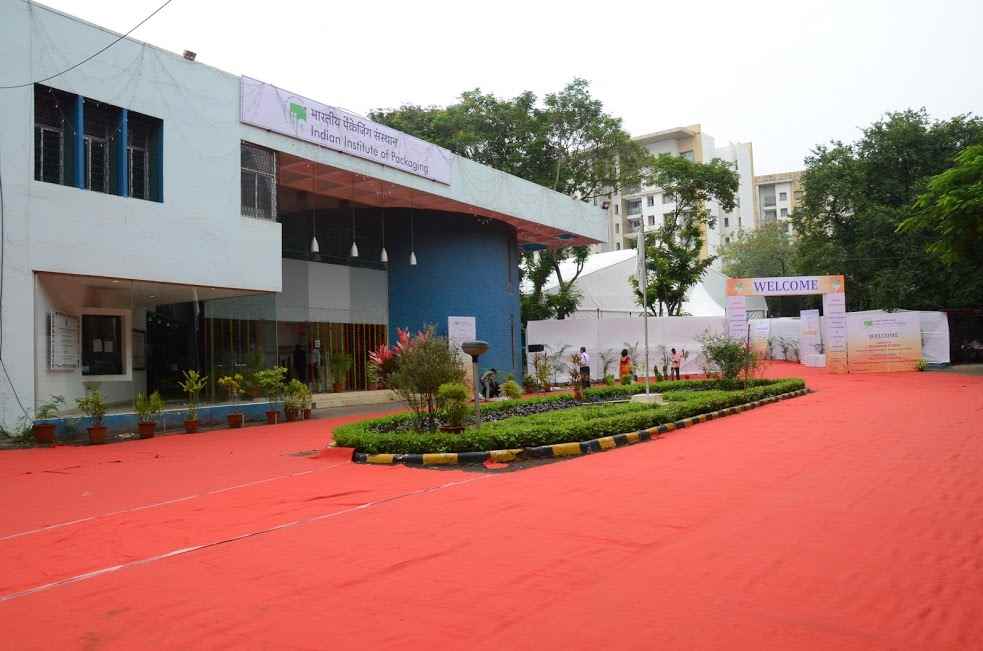
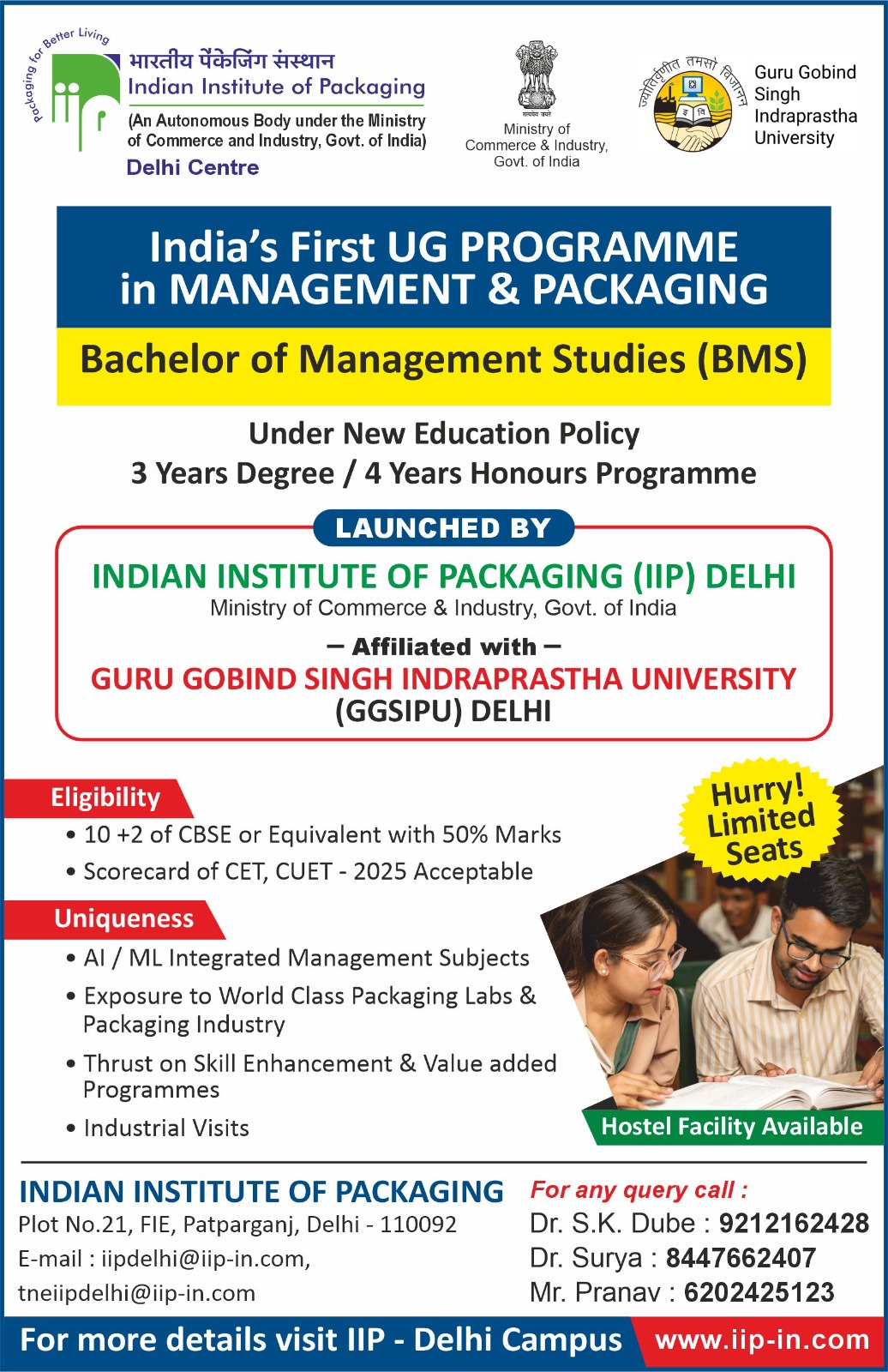
IIP Indian Institute of Packaging Delhi
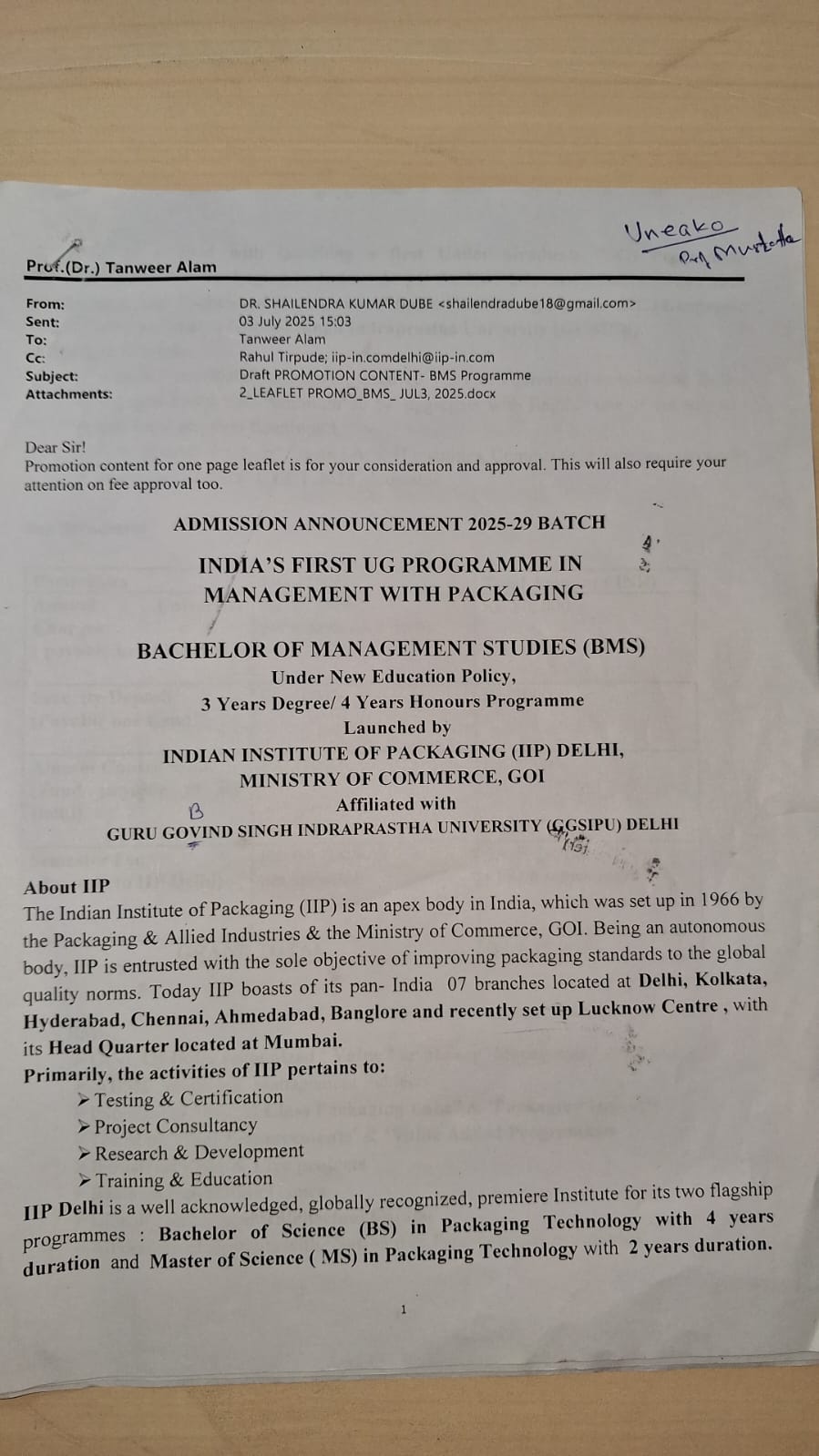
The Indian Institute of Packaging (IIP) is a national institution founded in 1966 by the packaging industry in collaboration with the Ministry of Commerce, Government of India. Its main goal is to improve packaging standards in the country.
IIP is an independent body but works under the Ministry of Commerce. It focuses on upgrading packaging quality to help boost exports and supports the development of packaging infrastructure across India.
The Institute carries out many activities to meet global packaging standards and aims to make India a key center for new ideas and advancements in packaging art, science, technology, and engineering.
IIP began with a small office in Mumbai. Today, its main office is still in Mumbai, and it also has centers in Delhi, Kolkata, Hyderabad, and Chennai.
Highlights
Indian Institute of Packaging Courses
The Indian Institute of Packaging (IIP) offers a wide range of courses designed to meet the growing demand for skilled professionals in the packaging industry. Its flagship program is the Post Graduate Diploma in Packaging (PGDP), a two-year full-time course available at IIP centers in Mumbai, Delhi, Hyderabad, Kolkata, and Chennai. This program is open to graduates in Science, Engineering, or Technology and includes both theoretical and practical training, with admission through an entrance test followed by an interview.
- Post Graduate Diploma in Packaging
- Diploma in Packaging
- Certificate Course in Packaging
Indian Institute of Packaging Admission
The admission process of IIP is completely dependent on Entrance based exams. Candidates must attempt the relevant exam to be eligible for admission. Indian Institute of Packaging (IIP) admission process for the most popular course – Post Graduate Diploma in Packaging (PGDP).
Here you can see the brief guidance for the admission into PGDP course
Step 1: Check Eligibility
- Must have a graduate degree in Science / Engineering / Technology with at least Second Class (45–50%).
Step 2: Fill Out the Online Application Form
Visit the official website: [https://iiponline.iip-in.com](https://iiponline.iip-in.com)
Create an account and log in.
Fill in personal, academic, and contact details.
Upload the required documents:
- Mark sheet of 10th and 12th class
- Graduation mark sheets/certificates
- Passport-size photo
- ID proof (Aadhaar, PAN, etc.)
Step 3: Pay the Application Fee
- Application Fee: ₹500 (non-refundable)
- Payment via credit/debit card, UPI, or net banking.
Step 4: Take the IIP-CET (Indian Institute of Packaging – Common Entrance Test)
Mode: Offline (paper-based)
Exam Date: Usually in June (e.g., 22 June 2025)
Test Cities Location: Mumbai, Delhi, Kolkata, Hyderabad, Chennai, Ahmedabad
Syllabus includes:
- Physics, Chemistry, Mathematics
- General Knowledge
- Logical Reasoning
- English
Step 5: Personal Interview
- Both are held on the same day entrance exam as well as a personal interview
- Assess communication, technical awareness, and motivation for the course.
Step 6: Final Merit List
Prepared based on the following weightage:
- Class 10 marks – 10%
- Class 12 marks – 10%
- Graduation – 30%
- Entrance Test – 30%
- Interview – 20%
Step 7: Admission Confirmation
Shortlisted candidates receive an offer letter.
Candidates have to pay the admission fees just to confirm their seat:
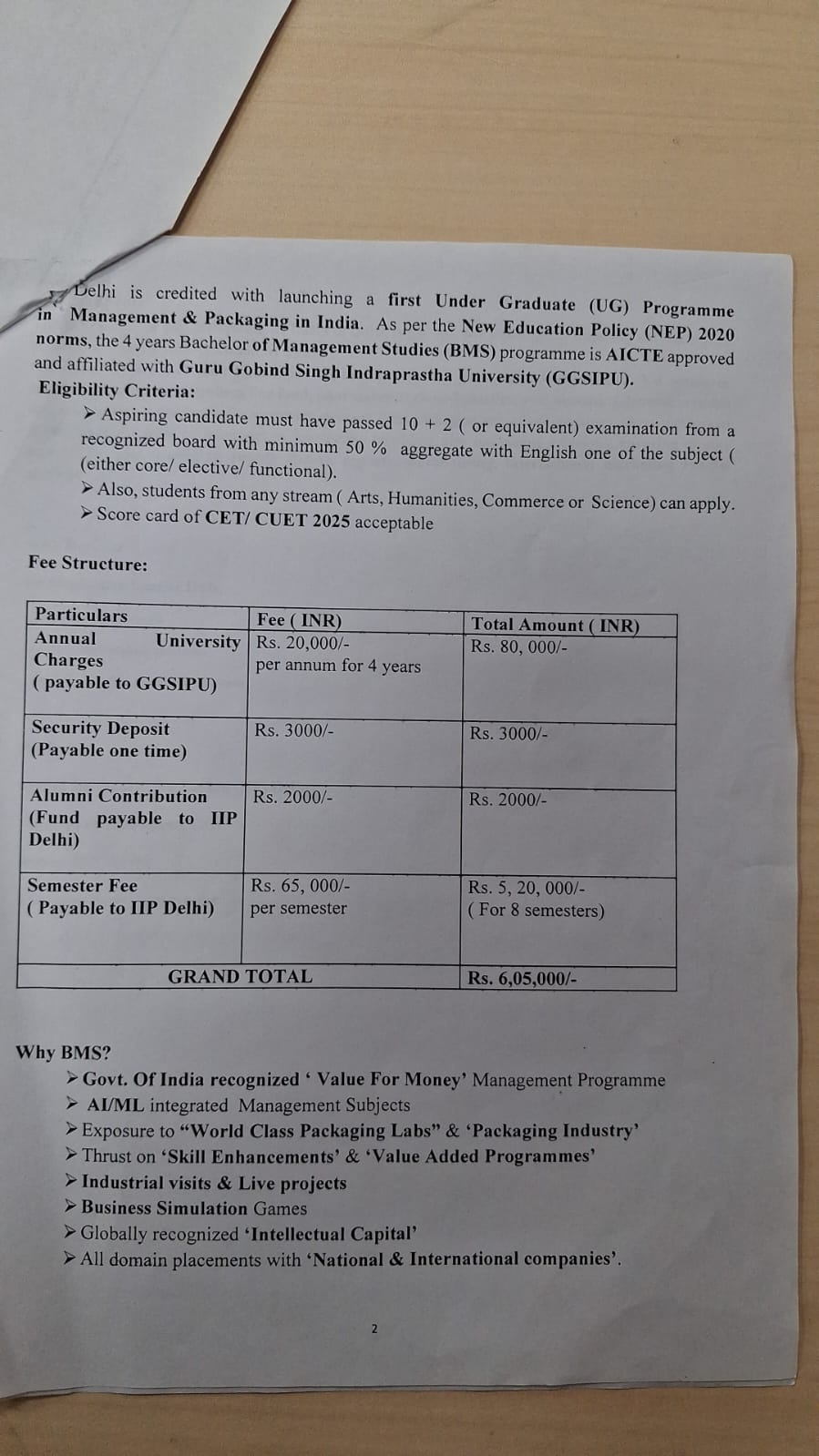
- Admission Fee: ₹60,000
- Semester Fee: ₹70,000 (per semester)
- Refundable deposit: ₹3,000
Indian Institute of Packaging Eligibility
Indian Institute of Packaging Fees
The fee structure for courses at the Indian Institute of Packaging (IIP) varies based on the program, its level, and specialisation. Each course has a different fee amount depending on its duration and mode of study. Candidates who successfully clear all stages of the admission process are required to pay a portion of the course fee to confirm their admission. The total fee may include multiple components such as tuition fees, hostel charges, one-time admission fees, and other applicable charges.
Indian Institute of Packaging Review
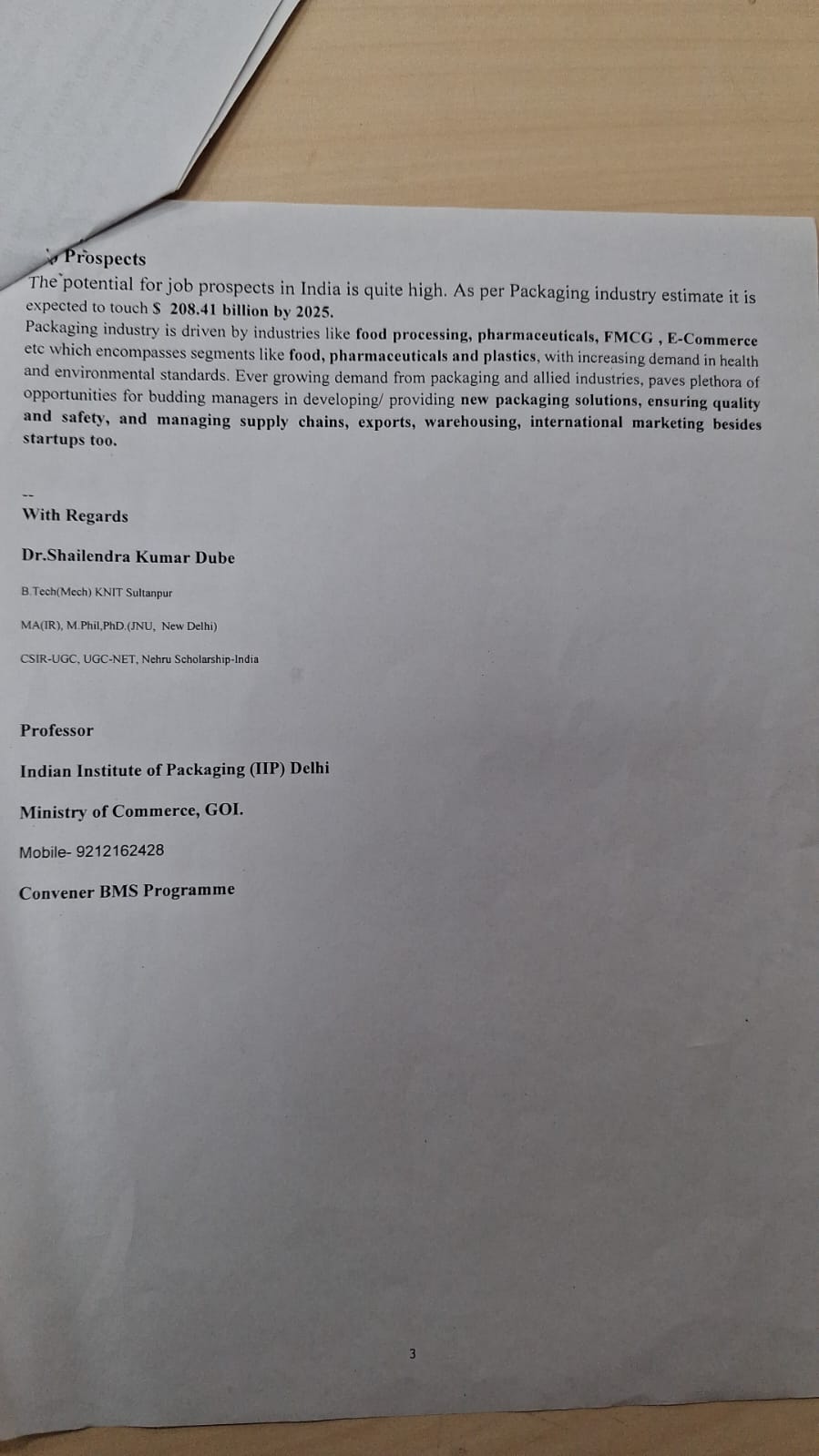
Indian Institute of Packaging Placement
Indian Institute of Packaging Recruiters
Facilities

AC Classrooms

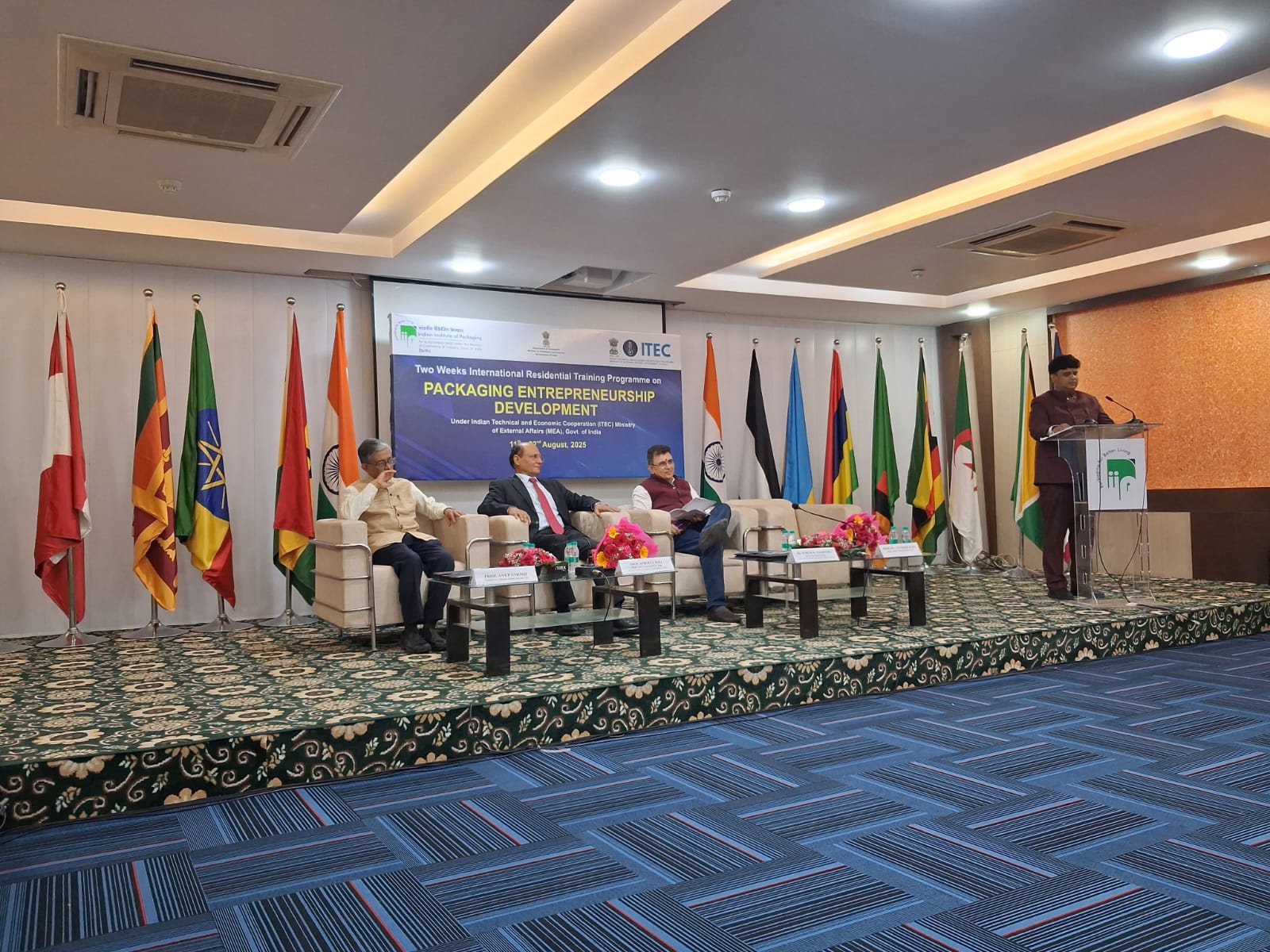
Auditorium

Convenience Store

Cafeteria

Wi-Fi Campus

Sports Complex

Shuttle Service

Medical Facilities

Labs

Hostel
Gallery
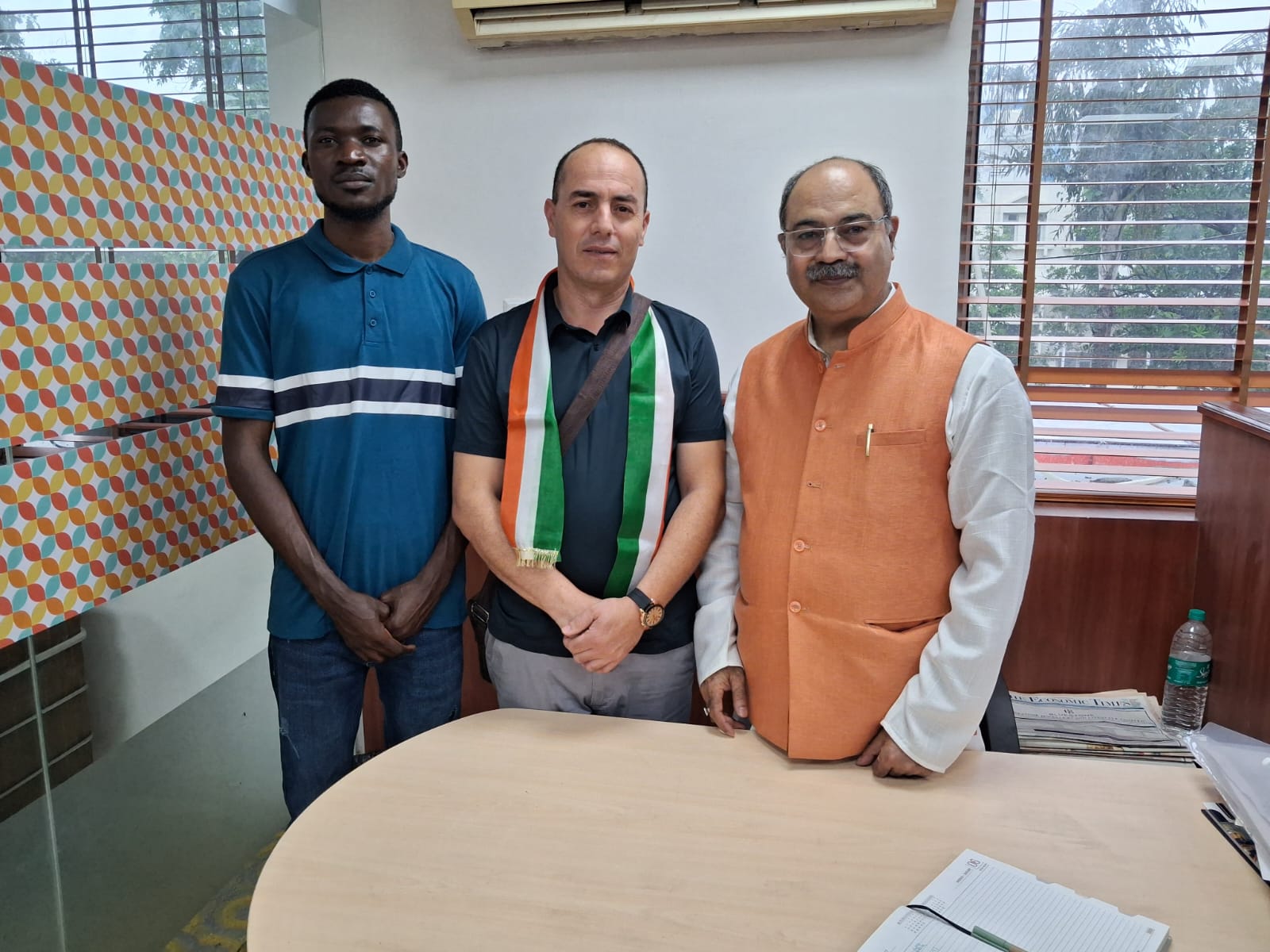
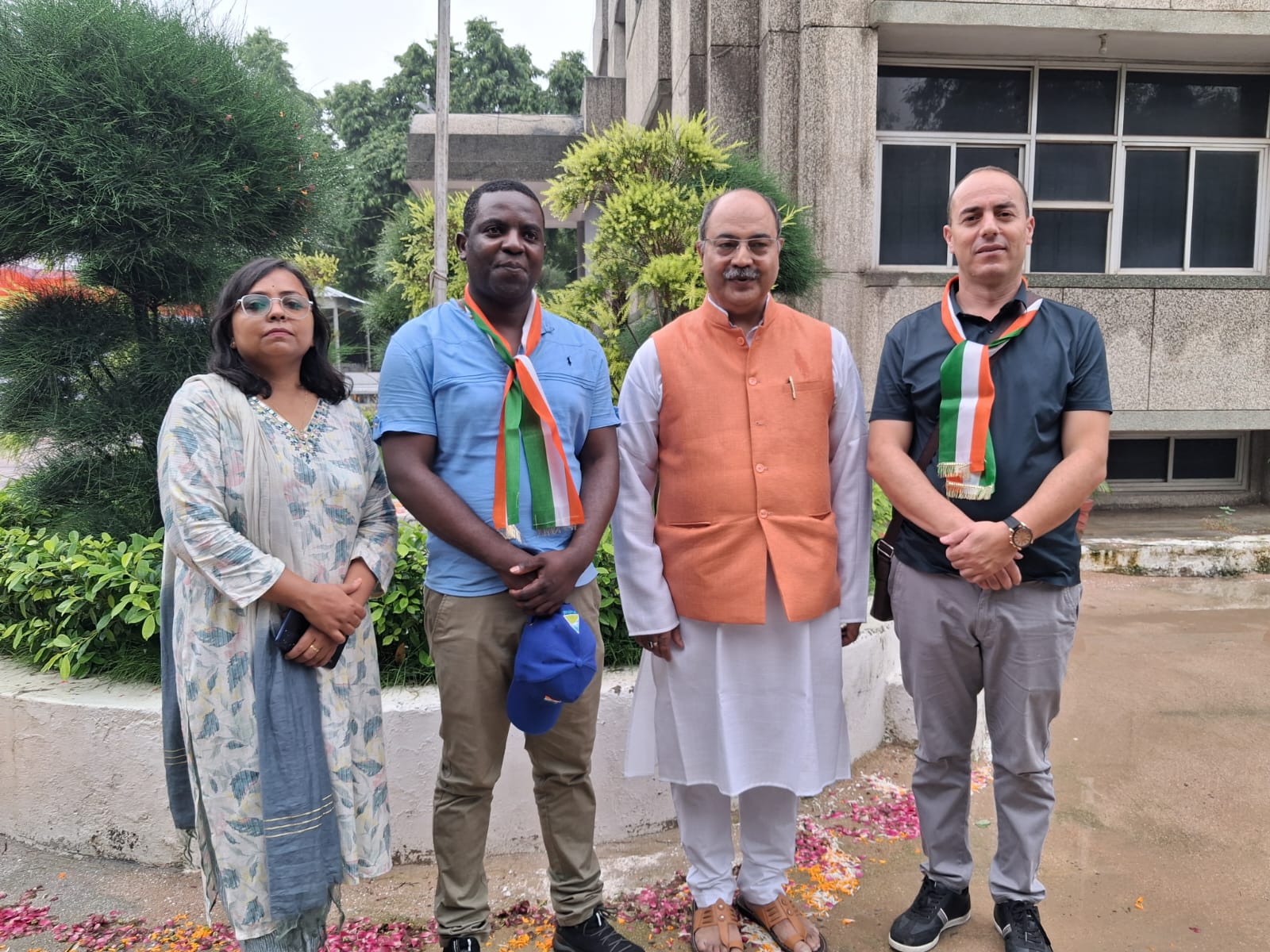

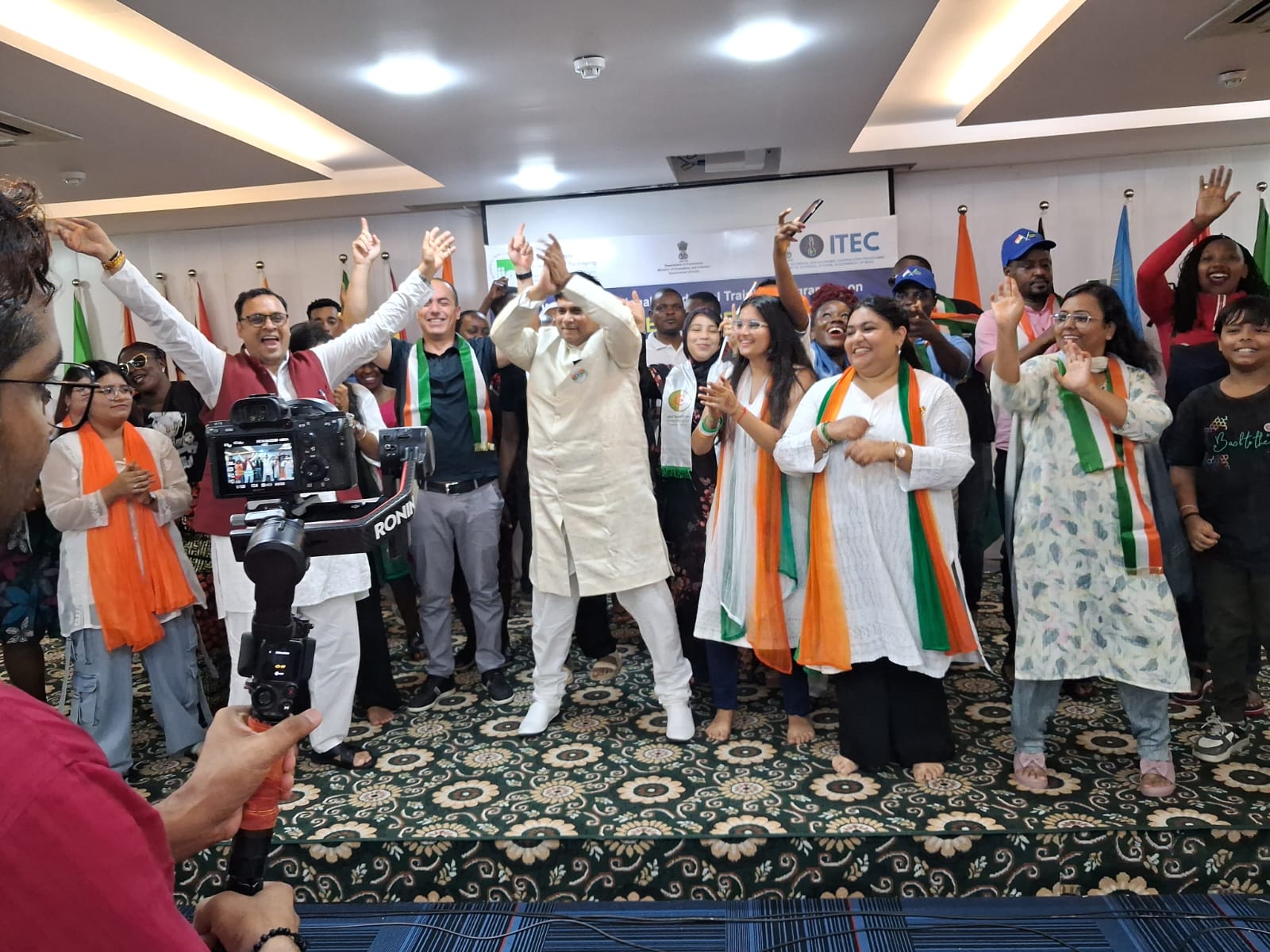
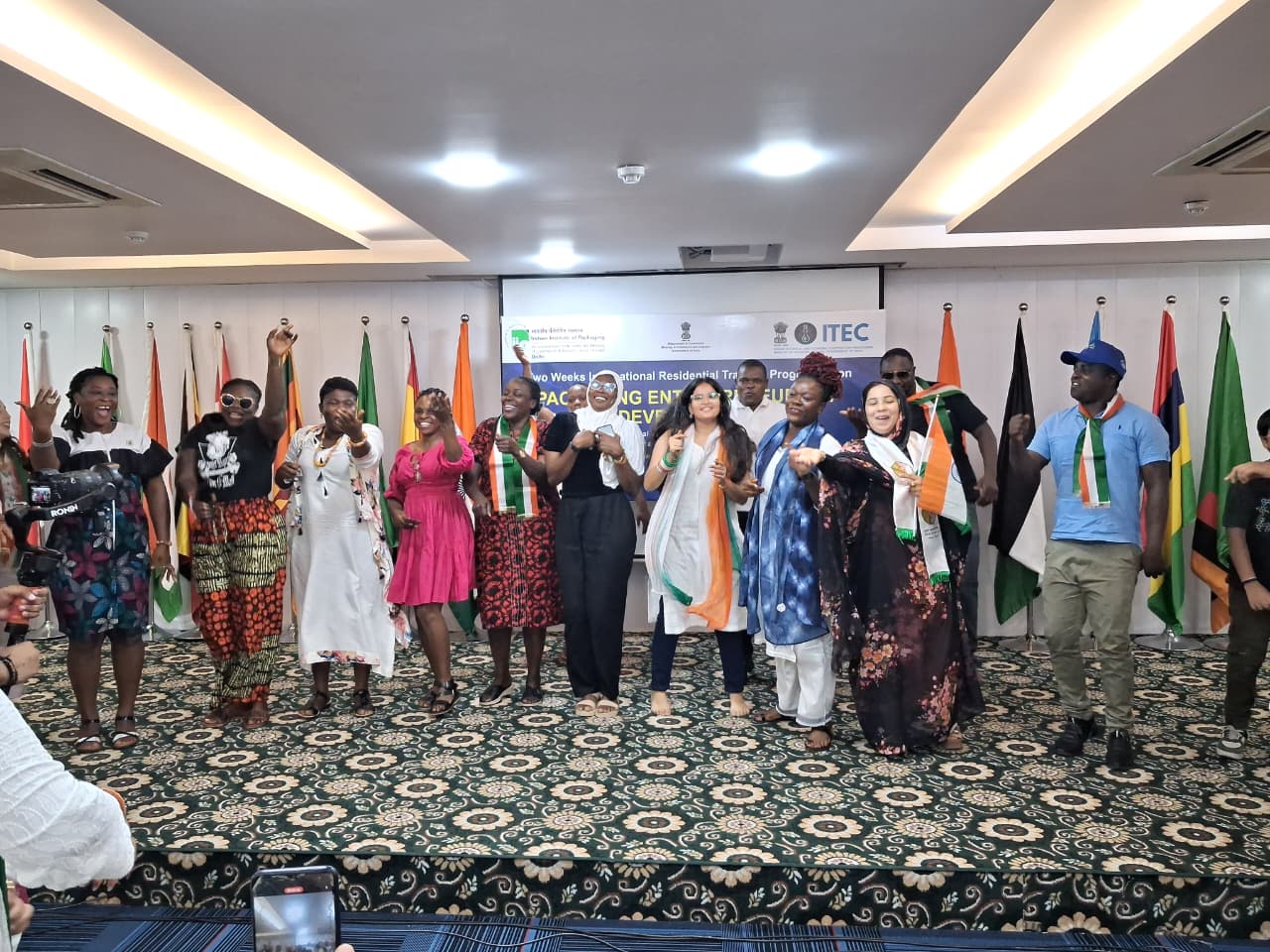
Contact
Delhi Plot No. 21, Functional Industrial Estate, Patparganj, Near Udyog Sadan Delhi - 110092
rodel.iip@gov.in
-
PGDM-Post Graduate Diploma in Management
Total Fee: INR 745000
-
B.Com Bachelor of Commerce
Total Fee: INR 240000
-
PGDM-Post Graduate Diploma in Management
Total Fee: INR 745000
-
B.Com Bachelor of Commerce
Total Fee: INR 240000
-
PGDM-Post Graduate Diploma in Management
Total Fee: INR 745000
-
B.Com Bachelor of Commerce
Total Fee: INR 240000
-
PGDM-Post Graduate Diploma in Management
Total Fee: INR 745000
-
B.Com Bachelor of Commerce
Total Fee: INR 240000
Highlights
- International Institute of Business Studies (IIBS) is an AICTE Approved college which is recognized by Ministry of HRD, Government of Indias
- IIBS rated India’s No.1 emerging B-School in placement by Samaja Parivarthana
- Faculty of IIBS consists of experienced corporate faculty with 65% Ph.D. holders
- Ranked 2nd among 'Top 10 Southern B Schools' by Silicon India, 2017
- Ranked 3rd in Placement among the Best B-School in India 2017 by Silicon India
Modern Facilities
- Smart Classroom: IIBS provides fully equipped classroom with air-conditioned, projectors, remote controlled LCD and high speed connected computers and cordless microphones
- Library: It is fully equipped by highly information recourses like latest periodicals, reference texts, management text books, national and international journals and DVDs and well organized
- Digital Library: Students of IIBS can be access the digital library through any computers by using their ID and password
- Auditorium: IIBS auditorium is fully furnished and laced with all modern devices to more impactful view
- Hostel: IIBS provides hostel accommodation for boys and girls with mesh facility
Conducting IIMs have been changed the pattern of the CAT exams several times over the years. It is extremely beneficial for the aspirants to know the CAT paper pattern as it helps in preparation and the aspirants can prepare according to the pattern and weightage of the topics.
Overview of the Exam Pattern of CAT 2020
| Mode of the Exam | Online Only |
|---|---|
| Total number of Questions | 100 |
| Total Marks | 300 |
| Duration of the Examination | 3 hours (180 minutes) |
| Sectional Division of the Paper | 3 sections |
| Types of the Questions | Both MCQs and Non MCQs |
| Marking Scheme |
For Correct Answers → +3 marks For Incorrect Answers → -1 mark For Unattempted Questions → No marks |
| Name of the Sections |
1. Verbal Ability & Reading Comprehension 2. Logical Reasoning & Data Interpretation 3. Quantitative Aptitude |
This Exam is conducted once in a year usually in the month of November on online mode and it is expected that this year this exam will held in the last week of November. The question paper contains 100 questions to be solved in 3 hours. 3 marks are assigned for correct answer and 1 mark is deducted for wrong answer in CAT Exam. English is the only medium of answering the questions. Each question consists of four choices from which only one is correct, candidates have to select the right answer from the given options.
CAT question paper consists of three sections divided as
- 1. Verbal and Reading Comprehension (VARC)
- 2. Data Interpretation & Logical Reasoning (DI & LR)
- 3. Quantitative Ability (QA)
Overview of the Exam Pattern of CAT 2020
| Section’s Name | Number of Questions | Duration (in mins) |
|---|---|---|
| Verbal and Reading Comprehension (VARC) | 34 | 60 |
| Data Interpretation & Logical Reasoning (DI & LR) |
VA → 10 Questions RC → 24 Questions |
60 |
| Quantitative Ability (QA) |
DI → 16 Questions LR → 16 Questions |
60 |
| Total | 100 | 180 minutes (3hours) |
Verbal Ability and Reading Comprehension Section
This section is a combination of two sub-sections namely Verbal Ability (VA) and Reading Comprehension (RC). The main focus of this section is on the English language skills of the candidates and how they understand and elucidate the paragraphs and Passages. This section consists of 34 questions, 10 questions of Verbal Ability and 24 questions of Reading Comprehension. Verbal ability sub-section consists of questions related to Para-jumbles, Summary based questions, Sentence Correction and Completion. The other sub-section, Reading Comprehension is based on the questions related to Vocabulary, title etc.
Logical Reasoning & Data Interpretation Section
This section is also divided into two sub-sections, one is Logical Reasoning (LR) and other is Data Interpretation (DI). A total of 32 questions are asked in this section, 16 questions from both the sub-section. LR section contains solvable questions generally from the topics like inequalities, symbol operations, direction sense test etc. On the other hand DI section is a little difficult and time-consuming section as it consists of several confusing data case lets questions. This section contains tricky question and a little mistake in understanding the case lets can lead the candidates to attempt all the questions from a particular set incorrectly.
Quantitative Aptitude Section
This section is a standalone section which comprises only numerical questions from different topics of Math. A total of 34 questions are asked in this section. This section contains questions based on Basic Arithmetic, Number System, Geometry, Algebra, Modern Math etc. The questions in this section ranges from easy to moderately high and can be answered easily with proper practice of the syllabus of Quantitative Aptitude.

|
Prof. Prabhakar H
B.Sc., PG in HRD, PG in Training & Development |
|
|
Prof. Prabhakar H
B.Sc., PG in HRD, PG in Training & Development |
|
|
Prof. Prabhakar H
B.Sc., PG in HRD, PG in Training & Development |
|
|
Prof. Prabhakar H
B.Sc., PG in HRD, PG in Training & Development |
|
|
Prof. Prabhakar H
B.Sc., PG in HRD, PG in Training & Development |
|
|
Prof. Prabhakar H
B.Sc., PG in HRD, PG in Training & Development |
Facilities


CAT 2020 will be conducted in the following cities:
| Port Blair | Kurnool | Nellore | Tirupati |
| Vijaywada | Visakhapatnam | Chittoor | Itanagar |
| Dibrugarh | Guwahati | Silchara | Aurangabad |
| Gaya | Muzaffarpur | Patna | Chandigarh |
| lorem | lorem | lorem | lorem |
Contact Us
#75, Muthugadahalli, Bangalore North Jala Hobli, near International Airport airport(New Airport), Bangalore ( Karnataka)
admission@iibsonline.com


