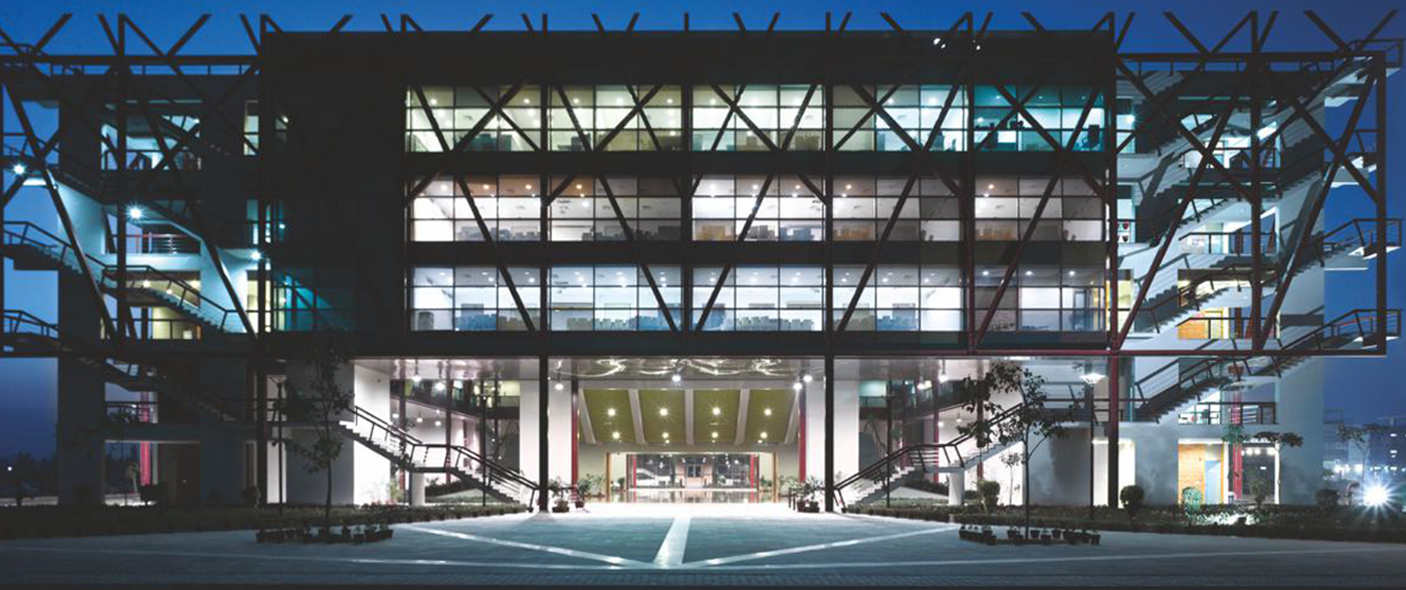
O.P Jindal School of Art and Architecture Sonepat
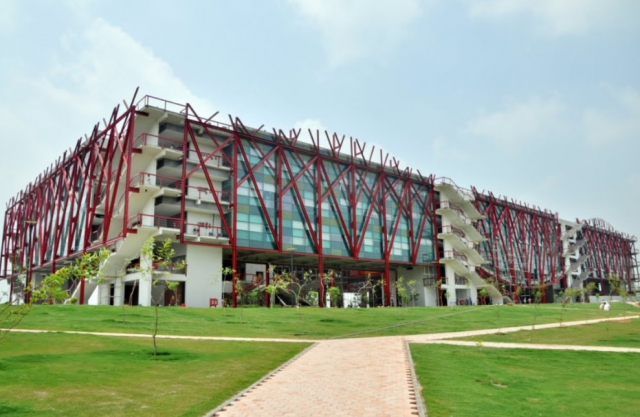
The Jindal School of Art and Architecture (JSAA) in Sonipat, Haryana, is a prominent part of O.P. Jindal Global University, dedicated to interdisciplinary approaches in architecture and design. Offering both undergraduate and postgraduate programs, JSAA's curriculum integrates theoretical knowledge with practical skills, providing a comprehensive educational experience. The school features a diverse faculty with rich academic and professional backgrounds, fostering an enriching learning environment. Its state-of-the-art infrastructure includes design studios, workshops, and digital fabrication labs, facilitating hands-on learning. By promoting collaboration across fields such as sociology, environmental studies, and art, JSAA prepares students for a holistic understanding of architecture. A strong emphasis on sustainability addresses contemporary environmental challenges, while students and faculty engage in innovative research projects focused on architectural solutions and urban design. Additionally, the school encourages community involvement through outreach programs, enabling students to apply their skills in real-world contexts. Overall, JSAA is committed to cultivating a new generation of architects and designers equipped to confront complex challenges in the built environment.
Courses
Highlights
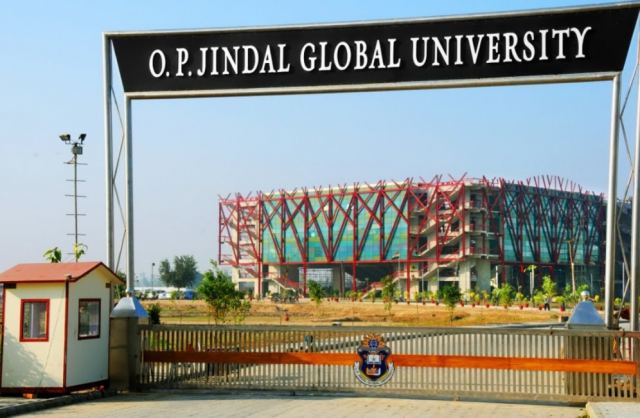
The Jindal School of Art and Architecture (JSAA), established in 2018, is part of OP Jindal Global University. In the QS World University Ranking 2024, Jindal University is ranked between 951-1000 and is recognized by the UGC, AIU, and MHRD. JSAA is India's first interdisciplinary school dedicated to the built environment, offering a range of undergraduate programs in Architecture and Design. Admissions are based on entrance exams such as the Jindal Creative Aptitude Test, UCEED, NATA, JEE Main, and SAT India.
JSAA boasts a distinguished faculty composed of experts including urbanists, architects, historians, anthropologists, artists, lawyers, and engineers, many of whom have studied and taught at renowned institutions worldwide. The school has formed collaborations with over 20 international universities and institutes, including Newcastle University in the UK, Inchbald School of Design in the UK, and the University of Adelaide in Australia.
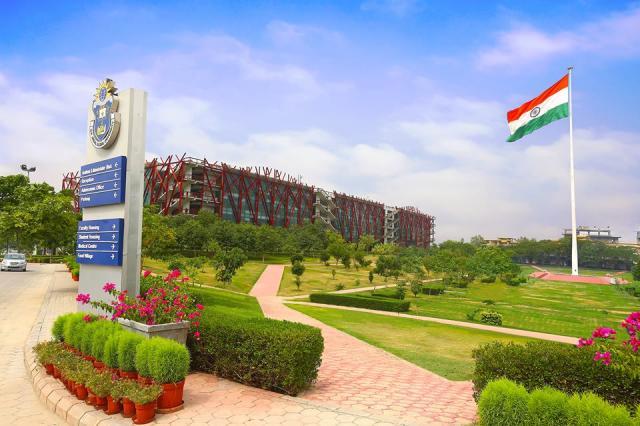
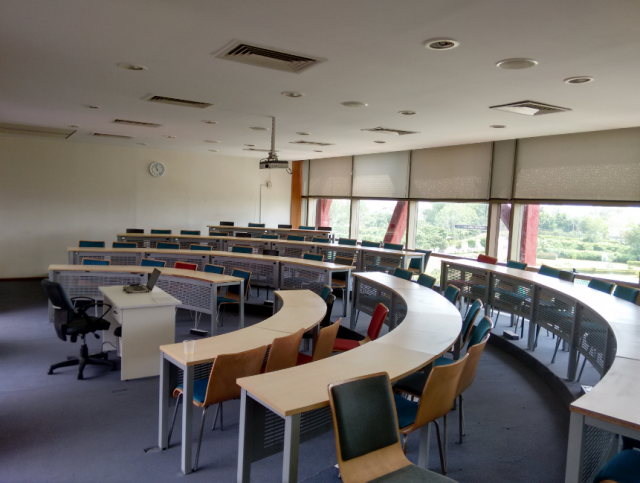
The JSAA campus features cutting-edge, technology-enabled infrastructure designed to enhance learning in Design and Architecture. Facilities include hostels, sports amenities, a library, health services, a Digital Centre, a Virtual Environment Lab, a Foundation Studio, an Environmental Research Lab, a Construction Yard and Lab, and a Fabrication Lab. Below are some key highlights of the Jindal School of Art and Architecture:
|
Particulars |
Statistics |
|
Year of establishment |
2018 |
|
Ownership type |
Private |
|
Also Known as |
JSAA |
|
Campus Location |
Sonipat, Haryana |
|
Campus size |
80 acre (JGU) |
|
Recognised by |
UGC |
|
Modes of education |
Full-time |
|
Number of courses offered |
4 |
|
Popular Courses |
BDes, BArch |
|
Entrance Exams accepted |
Jindal Creative Aptitude Test, UCEED, NATA, JSAT, SAT India, etc. |
|
Application Process |
Online |
|
Type of scholarships |
Merit-cum-Means Scholarships |
|
Top recruiters |
Neemrana, Herman Miller, Hyderabad Urban Lab, Opus Indigo, etc. |
|
International Collaborations |
University of Liverpool UK, Inchbald School of Design London UK, University of Adelaide Australia, Nottingham Trent University UK, Dalhousie University Canada, etc. |
Jindal School of Art and Architecture Sonipat Course
The Jindal School of Art and Architecture in Sonipat, Haryana, India, offers a range of courses focused on design, architecture, and the built environment. Its interdisciplinary approach blends liberal arts, design thinking, and sustainability. Here are some of the main courses available:
Bachelor of Architecture (B.Arch)
- This is a professional degree program that meets the requirements set by the Council of Architecture (COA) in India. The program emphasizes the integration of design, technology, and critical thinking.
Bachelor of Arts (Hons.) in Built Environment Studies
- This program is designed for students interested in understanding the broader context of the built environment, including urbanism, spatial practices, and socio-political aspects of architecture.
Bachelor of Design (B.Des) in Architecture and Built Environment
- The program focuses on the intersection of design, technology, and human-centered approaches. Students learn to approach design from a systemic and ecological perspective.
Master of Architecture (M.Arch)
- The postgraduate program focuses on advanced architectural studies with a special emphasis on research, theory, and technology. It encourages innovation and experimentation in design practices.
PhD in Architecture and Allied Fields
- The PhD program is research-intensive and allows scholars to explore a wide range of topics related to architecture, urbanism, design, and cultural practices. It aims to produce thought leaders who contribute to academic and practical fields.
Jindal School of Art and Architecture Sonipat Admission
Admission to the Jindal School of Art and Architecture (JSAA) at O.P. Jindal Global University (JGU) in Sonipat is a selective process that evaluates a combination of academic performance, aptitude for design, and creative thinking. Here's an overview of the key steps and requirements for admission:
Undergraduate Programs
Bachelor of Architecture (B.Arch)
Eligibility:
- Completion of 10+2 or equivalent with a minimum of 50% marks.
- Candidates must have studied Mathematics at the 10+2 level.
- Must have a valid NATA (National Aptitude Test in Architecture) score or JEE Main Paper 2 score, as per the Council of Architecture (COA) norms.
Admission Process:
- Submit an online application via JGU's official admissions portal.
- Provide the required academic and NATA/JEE Main Paper 2 score details.
- Shortlisted candidates may have to attend an interview or portfolio review session.
Bachelor of Arts (Hons.) in Built Environment Studies
Eligibility:
- Completion of 10+2 or equivalent in any stream with a minimum of 50% marks.
Admission Process:
- Online application submission through JGU’s admissions portal.
- There may be an interview or portfolio assessment based on the school’s requirements.
Bachelor of Design (B.Des) in Architecture and Built Environment
Eligibility:
- Completion of 10+2 or equivalent in any stream with a minimum of 50% marks.
Admission Process:
- Submit an online application through the university’s admissions system.
- Portfolio review and interview may be required for shortlisted candidates.
Postgraduate Programs
Master of Architecture (M.Arch)
Eligibility:
- Bachelor’s degree in Architecture (B.Arch) from a recognized institution, with a minimum of 50% aggregate marks.
- Applicants may need to provide details of any work experience, portfolios, or relevant projects.
Admission Process:
- Submit an online application.
- Interview and/or portfolio review for shortlisted candidates.
PhD in Architecture and Allied Fields
Eligibility:
- A postgraduate degree in Architecture or a relevant discipline.
- Strong academic background with research potential.
Admission Process:
- Submission of research proposal and academic transcripts.
- An interview with faculty and submission of portfolio or research work may be required.
Jindal School of Art and Architecture Sonipat Eligibility
The Jindal School of Art and Architecture at O.P. Jindal Global University in Sonipat is committed to providing a world-class education in architecture, design, and the built environment. JSAA's programs are designed to equip students with both the theoretical knowledge and practical skills needed to address contemporary challenges in architecture and urban development. Admission to these programs is highly selective, with eligibility criteria tailored to ensure that students have a strong academic background and a passion for design and innovation.
The eligibility requirements vary depending on the program, from undergraduate degrees in architecture and design to postgraduate and doctoral research opportunities. These criteria ensure that students are well-prepared to thrive in the rigorous academic environment that JSAA offers.
|
Courses |
Duration |
Eligibility |
|
B.Arch |
5 Years |
10+2 : 50 % Exams : NATA |
|
B.Des |
4 Years |
Exams : UCEED |
|
B.A. |
3 Years |
10+2 : 50 % Exams : NATA, SAT India |
|
M.Arch |
2 Years |
10+2 : 50 % Exams : NATA, SAT India |
|
Ph.D |
3 Years |
--/-- |
Jindal School of Art and Architecture Sonipat Fees
The Jindal School of Art and Architecture in Sonipat offers a range of programs in architecture, design, and the built environment. To maintain its commitment to providing a world-class education, JSAA has structured its fee system to reflect the quality of education, resources, and facilities available to students.
The fee structure encompasses various components, including tuition fees, development fees, and other associated costs, such as materials, workshops, and extracurricular activities. These fees are designed to support an enriching academic experience that combines rigorous theoretical study with hands-on practical training. While the cost of education can be significant, JSAA also provides various scholarship opportunities and financial aid options to assist deserving students in pursuing their academic goals.
Understanding the fee structure is essential for prospective students and their families as they plan for their educational investment and explore the financial resources available to support their studies at JSAA.
|
Courses |
Duration |
Eligibility |
|
B.Arch |
5 Years |
20 L |
|
B.Des |
4 Years |
12 L |
|
B.A. |
3 Years |
18 L |
|
M.Arch |
2 Years |
18 L |
|
Ph.D |
3 Years |
--/-- |
Jindal School of Art and Architecture Sonipat Cutoffs
The Jindal School of Art and Architecture in Sonipat does not follow the traditional "cutoff" system used by many Indian universities. Instead, JSAA employs a holistic admission process that considers various factors, including academic performance, entrance exam scores, creative portfolios, and personal interviews. For programs like the Bachelor of Architecture (B.Arch), candidates must meet specific eligibility criteria, such as having a valid score in the NATA (National Aptitude Test in Architecture) or JEE Main Paper 2, as per the Council of Architecture (COA) norms. Additionally, applicants must have completed 10+2 or an equivalent qualification with a minimum of 50% aggregate and Mathematics as a required subject. For other undergraduate programs, such as the B.A. (Hons.) in Built Environment Studies and the B.Des. in Architecture and Built Environment, academic performance, along with interviews and portfolio reviews, plays a significant role in the selection process.
Jindal School of Art and Architecture Sonipat Placement
The Jindal School of Art and Architecture in Sonipat is a prominent hub for leading companies from various industries that actively participate in on-campus recruitment drives. Its dedicated Placement Cell, known as the Corporate Resource Centre, plays a vital role in bridging students with career opportunities. This center provides mentorship, training, and guidance, ensuring students receive well-rounded support throughout the recruitment process.
|
Highest Package |
12 LPA |
|
Average Package |
4-5 LPA |
|
Placement Rate |
100% |
|
Top Recruiters |
American Express, Dabur, Edelweiss Securities, HDFC Bank, etc. |
Jindal School of Art and Architecture Sonipat Review
|
Placements |
5.0 |
|
Infrastructure |
5.0 |
|
Faculty & Course Curriculum |
5.0 |
|
Crowd & Campus Life |
4.0 |
|
Value of Money |
5.0 |
Jindal School of Art and Architecture Sonipat Ranking
The Jindal School of Art and Architecture, Sonipat, is steadily gaining recognition as a leading institution for design and architecture education in India. Although relatively new compared to more established schools, JSAA has made significant progress in academic innovation, sustainability-focused curricula, and interdisciplinary design practices. It is building a strong reputation for its progressive approach, integrating liberal arts and sustainability into its teaching, which has garnered attention both nationally and internationally. As part of JGU, which is highly ranked in global listings, such as the QS World University Rankings and the Times Higher Education (THE) Rankings, JSAA benefits from the university’s reputation as one of the top private institutions in India. This further enhances JSAA’s visibility and credibility. Additionally, the school's focus on sustainability, community engagement, and innovative design has positioned it as a forward-thinking institution, preparing students for the modern challenges in architecture and urban planning. While JSAA is still growing, its association with JGU’s high rankings and its distinctive academic offerings make it a rising force in architecture and design education in India.
Jindal School of Art and Architecture Sonipat Recruiters
The Jindal School of Art and Architecture, Sonipat, is committed to bridging the gap between academia and industry through strong ties with leading recruiters in the fields of architecture, design, urban planning, and the built environment. JSAA’s curriculum, which emphasizes interdisciplinary learning, practical skills, and sustainability, equips students with the expertise needed to thrive in competitive job markets.
The school's Corporate Resource Centre works actively to connect students with top firms, offering opportunities for internships, placements, and project-based collaborations. JSAA’s focus on innovation and real-world problem-solving has attracted a diverse range of recruiters, including architecture firms, design studios, urban development organizations, and sustainability-focused companies. This strong network of industry partnerships helps ensure that JSAA graduates are well-prepared to make meaningful contributions to their respective fields.
|
Dabur |
Kotak Bank |
Maruti Suzuki |
pwc |
|
American Express |
Edelweiss Securities |
ICICI |
HDFC Bank |
Faculty (10)
';|
S.No |
Faculty |
|
1. |
Prof. (Dr.) Jaideep ChatterjeeProfessor & Dean |
|
2. |
Prof. (Dr.) Badrinarayanan SrinivasanProfessor |
|
3. |
Prof. Czaee MalpaniProfessor of Practice |
|
4. |
Prof. Mohit DhingraAssociate Professor |
|
5. |
Prof.(Dr.) Anindita NagProfessor |
|
6. |
Prof. Abu Talha FarooqiAssociate Professor |
|
7. |
Dr. Alokeparna SenguptaAssociate Professor |
|
8. |
Khushboo KhannaAssistant Professor |
|
9. |
Prof.(Dr.) Kiljae AhnProfessor |
|
10. |
Sarover ZaidiAssociate Professor of Practice |
Facilities

AC Classrooms

Design Studio

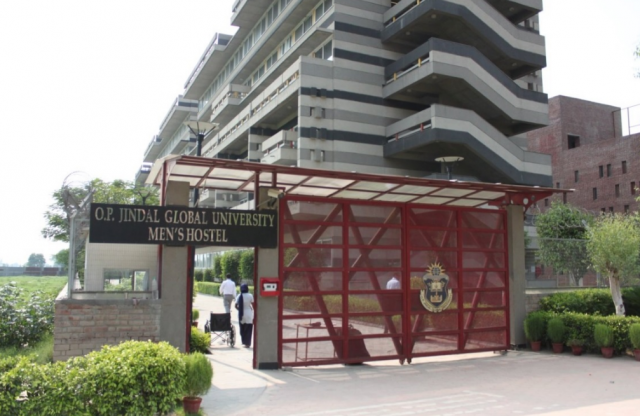
Hostel

Wi-Fi Campus

Ransomware by ./M789

Medical Facilities
Gallery
Contact
Sonipat Narela Road, Near Jagdishpur Village, Sonipat, Haryana - 131001, NCR of Delhi, India
info@jsaa.edu.in
-
PGDM-Post Graduate Diploma in Management
Total Fee: INR 745000
-
B.Com Bachelor of Commerce
Total Fee: INR 240000
-
PGDM-Post Graduate Diploma in Management
Total Fee: INR 745000
-
B.Com Bachelor of Commerce
Total Fee: INR 240000
-
PGDM-Post Graduate Diploma in Management
Total Fee: INR 745000
-
B.Com Bachelor of Commerce
Total Fee: INR 240000
-
PGDM-Post Graduate Diploma in Management
Total Fee: INR 745000
-
B.Com Bachelor of Commerce
Total Fee: INR 240000
Highlights
- International Institute of Business Studies (IIBS) is an AICTE Approved college which is recognized by Ministry of HRD, Government of Indias
- IIBS rated India’s No.1 emerging B-School in placement by Samaja Parivarthana
- Faculty of IIBS consists of experienced corporate faculty with 65% Ph.D. holders
- Ranked 2nd among 'Top 10 Southern B Schools' by Silicon India, 2017
- Ranked 3rd in Placement among the Best B-School in India 2017 by Silicon India
Modern Facilities
- Smart Classroom: IIBS provides fully equipped classroom with air-conditioned, projectors, remote controlled LCD and high speed connected computers and cordless microphones
- Library: It is fully equipped by highly information recourses like latest periodicals, reference texts, management text books, national and international journals and DVDs and well organized
- Digital Library: Students of IIBS can be access the digital library through any computers by using their ID and password
- Auditorium: IIBS auditorium is fully furnished and laced with all modern devices to more impactful view
- Hostel: IIBS provides hostel accommodation for boys and girls with mesh facility
Conducting IIMs have been changed the pattern of the CAT exams several times over the years. It is extremely beneficial for the aspirants to know the CAT paper pattern as it helps in preparation and the aspirants can prepare according to the pattern and weightage of the topics.
Overview of the Exam Pattern of CAT 2020
| Mode of the Exam | Online Only |
|---|---|
| Total number of Questions | 100 |
| Total Marks | 300 |
| Duration of the Examination | 3 hours (180 minutes) |
| Sectional Division of the Paper | 3 sections |
| Types of the Questions | Both MCQs and Non MCQs |
| Marking Scheme |
For Correct Answers → +3 marks For Incorrect Answers → -1 mark For Unattempted Questions → No marks |
| Name of the Sections |
1. Verbal Ability & Reading Comprehension 2. Logical Reasoning & Data Interpretation 3. Quantitative Aptitude |
This Exam is conducted once in a year usually in the month of November on online mode and it is expected that this year this exam will held in the last week of November. The question paper contains 100 questions to be solved in 3 hours. 3 marks are assigned for correct answer and 1 mark is deducted for wrong answer in CAT Exam. English is the only medium of answering the questions. Each question consists of four choices from which only one is correct, candidates have to select the right answer from the given options.
CAT question paper consists of three sections divided as
- 1. Verbal and Reading Comprehension (VARC)
- 2. Data Interpretation & Logical Reasoning (DI & LR)
- 3. Quantitative Ability (QA)
Overview of the Exam Pattern of CAT 2020
| Section’s Name | Number of Questions | Duration (in mins) |
|---|---|---|
| Verbal and Reading Comprehension (VARC) | 34 | 60 |
| Data Interpretation & Logical Reasoning (DI & LR) |
VA → 10 Questions RC → 24 Questions |
60 |
| Quantitative Ability (QA) |
DI → 16 Questions LR → 16 Questions |
60 |
| Total | 100 | 180 minutes (3hours) |
Verbal Ability and Reading Comprehension Section
This section is a combination of two sub-sections namely Verbal Ability (VA) and Reading Comprehension (RC). The main focus of this section is on the English language skills of the candidates and how they understand and elucidate the paragraphs and Passages. This section consists of 34 questions, 10 questions of Verbal Ability and 24 questions of Reading Comprehension. Verbal ability sub-section consists of questions related to Para-jumbles, Summary based questions, Sentence Correction and Completion. The other sub-section, Reading Comprehension is based on the questions related to Vocabulary, title etc.
Logical Reasoning & Data Interpretation Section
This section is also divided into two sub-sections, one is Logical Reasoning (LR) and other is Data Interpretation (DI). A total of 32 questions are asked in this section, 16 questions from both the sub-section. LR section contains solvable questions generally from the topics like inequalities, symbol operations, direction sense test etc. On the other hand DI section is a little difficult and time-consuming section as it consists of several confusing data case lets questions. This section contains tricky question and a little mistake in understanding the case lets can lead the candidates to attempt all the questions from a particular set incorrectly.
Quantitative Aptitude Section
This section is a standalone section which comprises only numerical questions from different topics of Math. A total of 34 questions are asked in this section. This section contains questions based on Basic Arithmetic, Number System, Geometry, Algebra, Modern Math etc. The questions in this section ranges from easy to moderately high and can be answered easily with proper practice of the syllabus of Quantitative Aptitude.
|
Prof. Prabhakar H
B.Sc., PG in HRD, PG in Training & Development |
|
|
Prof. Prabhakar H
B.Sc., PG in HRD, PG in Training & Development |
|
|
Prof. Prabhakar H
B.Sc., PG in HRD, PG in Training & Development |
|
|
Prof. Prabhakar H
B.Sc., PG in HRD, PG in Training & Development |
|
|
Prof. Prabhakar H
B.Sc., PG in HRD, PG in Training & Development |
|
|
Prof. Prabhakar H
B.Sc., PG in HRD, PG in Training & Development |
Facilities


CAT 2020 will be conducted in the following cities:
| Port Blair | Kurnool | Nellore | Tirupati |
| Vijaywada | Visakhapatnam | Chittoor | Itanagar |
| Dibrugarh | Guwahati | Silchara | Aurangabad |
| Gaya | Muzaffarpur | Patna | Chandigarh |
| lorem | lorem | lorem | lorem |
Contact Us
#75, Muthugadahalli, Bangalore North Jala Hobli, near International Airport airport(New Airport), Bangalore ( Karnataka)
admission@iibsonline.com


