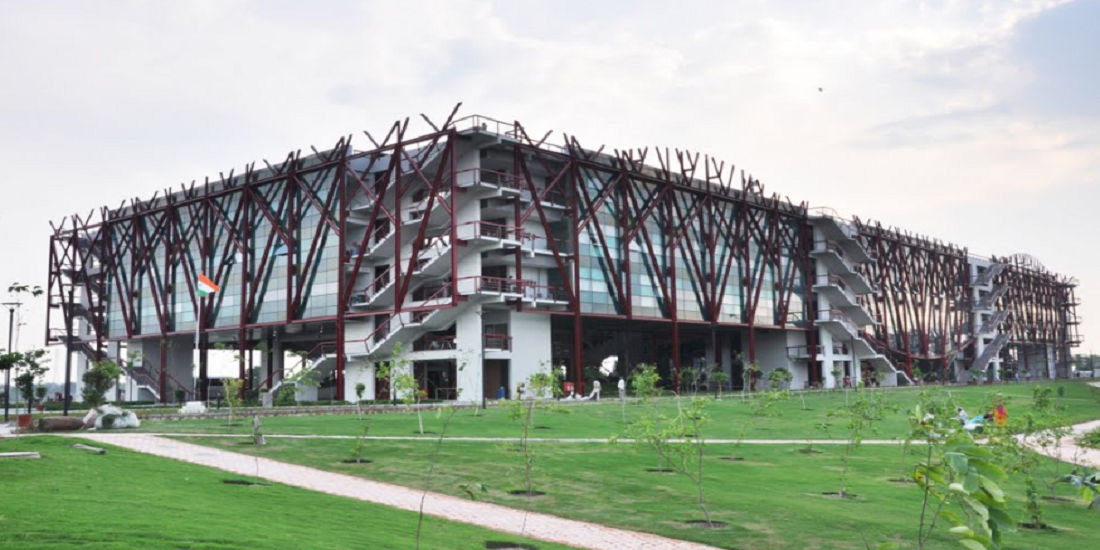
O.P Jindal School of Government and Public Policy Sonepat
|
Established In |
2009 |
|
University Type |
Private |
|
Also Know as |
JGU |
|
Location |
Sonepat, Haryana |
|
Recognised by |
UGC, MHRD, BCI |
|
Accreditation |
NAAC Grade “A” |
|
Total Students |
6,650 Female-47% Male-53% |
|
Total Faculty |
569 Female- 50% Male-50% |
|
Total Alumni |
2,900 |
|
Total Course |
5 in UG, PG & PhD |
|
Entrance Exam Accepted |
JSAT, JMAT, RAT |
|
Salary Package |
Highest (International)- 30.9 LPA Highest (Domestic)- 9.2 LPA Average-5 LPA Minimum- 4 LPA |
The Jindal School of Government and Public Policy (JSGP) aims to promote research that facilitates a better understanding of issues relating to governance and public policy. The programmes that the Jindal School of Government and Public Policy offers bear in mind the contribution that the faculty and the students of the school can make towards meeting the challenges of governance and improving the efficiency of government in India while drawing upon comparative and international perspectives. JSGP is a research-driven school and is dedicated to generating ideas and knowledge about, and practices of democratized development.
JSGP aims to promote research that facilitates a better understanding of issues relating to governance and public policy. The programmes that JSGP offers bear in mind the contribution that the faculty and the students can make towards meeting the challenges of governance and improving the efficiency of government in India while drawing upon comparative and international perspectives.
Courses
Highlights
Promotes various research activities among students through its three research centres Development and Finance, Ethics Law and Political Economy, and Science Society and Sustainability International collaboration with reputed universities/ organizations for student and faculty exchange programs viz UiTM, Malaysia, Peking University, China and many more Member of International Development and Public Policy Alliance (IDPA)
Why join Jindal School of Government & Public Policy?
- The curriculum of international standard
- Exposure to the latest research trends
- Strong emphasis on quantitative and qualitative research skills
- Research-active and internationally trained faculty
- International student and faculty exchange programmes
- Globally networked career development and placement division
O.P Jindal School of Government and Public Policy Sonepat Admission Process
The admission process for the O.P. Jindal School of Government and Public Policy (JSGP) in Sonepat typically includes the following steps:
Eligibility Criteria
Undergraduate Programs (B.A. Hons. in Economics or Social Science & Policy):
Candidates must have passed their 12th standard (or equivalent) with a minimum required percentage from a recognized board.
Postgraduate Programs (M.A. in Public Policy):
Candidates are usually evaluated on their undergraduate academic performance and entrance exams or interview results.
Entrance Exams
JSGP accepts scores from standardized tests such as JSAT (Jindal Scholastic Aptitude Test), SAT, or ACT for undergraduate programs.
For the M.A. in Public Policy, the school may also consider GRE scores or conduct its own entrance test. In some cases, work experience in relevant fields is taken into account.
Application Process
Online Application: Candidates need to submit an online application through the university's portal, filling in personal, academic, and test details.
Documents Submission: Transcripts, test scores, statement of purpose (SOP), letters of recommendation (LOR), and other relevant documents are typically required.
Interview Process
Shortlisted candidates may be invited for a personal interview (in person or online). The interview evaluates the candidate's interest, aptitude, and suitability for the program.
Selection & Admission Offer
Final admission is based on a combination of entrance exam scores, academic performance, interview results, and other factors like SOP and LOR.
Selected candidates receive an offer letter and are required to complete the admission formalities, including fee payment, by the specified deadline.
O.P Jindal School of Government and Public Policy Sonepat Course
The O.P. Jindal School of Government and Public Policy (JSGP) in Sonepat offers a range of courses designed to build a deep understanding of public policy, governance, economics, and social sciences. The school aims to train students for careers in government, non-governmental organizations (NGOs), international organizations, academia, and the private sector, emphasizing critical thinking and research skills.
UNDERGRADUATE
- B.Sc. & B.A. Economics (Hons.)
POSTGRADUATE
- M.A. Public Policy
DOCTORAL
- Ph.D Programme
Online
- M.A. Public Policy (Online)
O.P Jindal School of Government and Public Policy Sonepat Eligibility
The eligibility criteria for admission to the O.P. Jindal School of Government and Public Policy (JSGP) in Sonepat varies depending on the program.
|
Course |
Duration |
Eligibility |
|
B.Sc. & B.A. Economics (Hons.) |
4 Years |
Exams : : CUETJSAT |
|
M.A. Public Policy |
2 Years |
- |
|
M.A. Public Policy (Online) |
2 Years |
- |
O.P Jindal School of Government and Public Policy Sonepat Fees
The fee structure at O.P. Jindal School of Government and Public Policy (JSGP) in Sonepat varies depending on the program.
|
Course |
Duration |
Fees |
|
B.Sc. & B.A. Economics (Hons.) |
4 Years |
- |
|
M.A. Public Policy |
2 Years |
- |
|
M.A. Public Policy (Online) |
2 Years |
- |
O.P Jindal School of Government and Public Policy Sonepat Review
The O.P. Jindal School of Government and Public Policy (JSGP) in Sonepat has garnered a positive reputation for its interdisciplinary approach to public policy education, with strong faculty support, research opportunities, and a global outlook.
|
Component Ratings (Out of 5) |
|
|
Placements |
4.0 |
|
Infrastructure |
5.0 |
|
Faculty & Course Curriculum |
5.0 |
|
Crowd & Campus Life |
5.0 |
|
Value for Money |
4.0 |
O.P Jindal School of Government and Public Policy Sonepat Ranking
The O.P. Jindal School of Government and Public Policy (JSGP) in Sonepat, part of O.P. Jindal Global University (JGU), has gained recognition for its interdisciplinary approach to public policy education and research.
- Ranked No. 1 Private University in India by the QS World University Rankings 2023 for the third consecutive year.
- The only Indian private university in the top 150 'Young Universities in the World' (under 50 years) in the QS Young University Rankings 2022.
- Jindal Global Law School (JGLS) ranked No. 1 in India by the QS World University Rankings by Subject 2024 for the fifth year in a row.
- Ranked among the top 250 universities globally for its faculty-student ratio (1:9) and among the top 450 in the world for employer reputation.
- Among the top 550 universities worldwide for international faculty, with 14% of JGU's total faculty being international.
- The highest-ranked Indian university specializing in Law, Business & Management, International Affairs, Public Policy, Liberal Arts & Humanities, Journalism, Art & Architecture, Banking & Finance, Environment & Sustainability, Psychology & Counselling, Languages & Literature, and Public Health & Human Development.
O.P Jindal School of Government and Public Policy Sonepat Placement
The O.P. Jindal School of Government and Public Policy (JSGP) in Sonepat offers a robust placement and career support system, focusing on providing students with opportunities in diverse sectors, including government agencies, international organizations, NGOs, think tanks, and the private sector.
O.P Jindal School of Government and Public Policy Sonepat Recruiter
The O.P. Jindal School of Government and Public Policy attracts a wide range of recruiters from the public sector, international organizations, NGOs, private firms, and think tanks. Students benefit from a broad spectrum of career paths, including roles in policy-making, research, corporate social responsibility, and public advocacy, with opportunities for both domestic and international placements.
Faculty (10)
';|
S.no |
Faculty |
|
1. |
Sudarshan Ramaswamy Dean & Professor |
|
2. |
Naresh Singh Professor & Executive Dean |
|
3. |
Swagato Sarkar Professor |
|
4. |
Sonali Roy Professor |
|
5. |
Milindo Chakrabarti Professor |
|
6. |
Swetasree Ghosh Roy Professor |
|
7. |
Subhasish Ray Professor |
|
8. |
Subaran Roy Professor |
|
9. |
Indranil Mukhopadhyay Professor |
|
10. |
Sumeet Mhaskar Professor |
Gallery
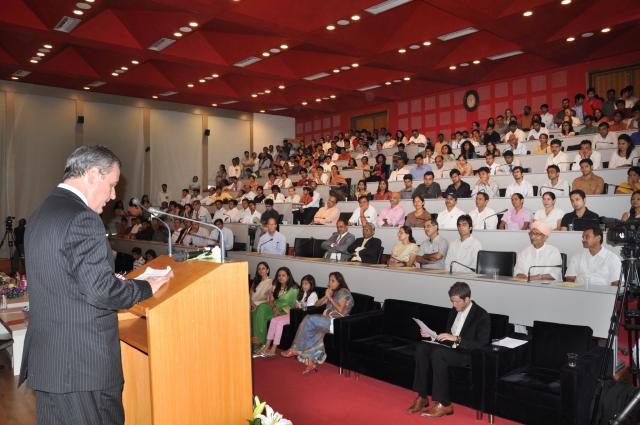
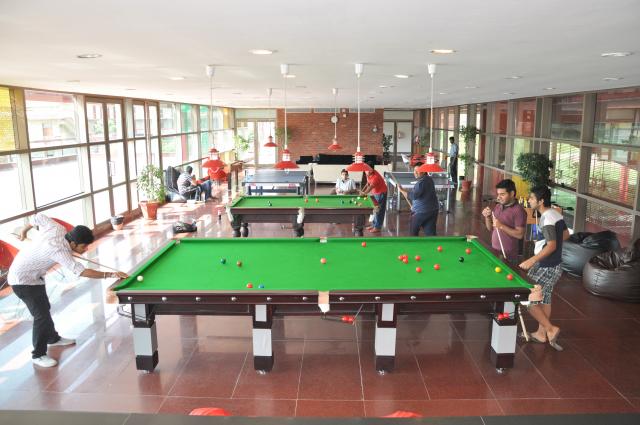
Contact
O.P. Jindal Global University Sonipat, Narela Road Near Jagdishpur village Sonipat, Haryana-131001, NCR of Delhi, India.
info@jgu.edu.in
-
PGDM-Post Graduate Diploma in Management
Total Fee: INR 745000
-
B.Com Bachelor of Commerce
Total Fee: INR 240000
-
PGDM-Post Graduate Diploma in Management
Total Fee: INR 745000
-
B.Com Bachelor of Commerce
Total Fee: INR 240000
-
PGDM-Post Graduate Diploma in Management
Total Fee: INR 745000
-
B.Com Bachelor of Commerce
Total Fee: INR 240000
-
PGDM-Post Graduate Diploma in Management
Total Fee: INR 745000
-
B.Com Bachelor of Commerce
Total Fee: INR 240000
Highlights
- International Institute of Business Studies (IIBS) is an AICTE Approved college which is recognized by Ministry of HRD, Government of Indias
- IIBS rated India’s No.1 emerging B-School in placement by Samaja Parivarthana
- Faculty of IIBS consists of experienced corporate faculty with 65% Ph.D. holders
- Ranked 2nd among 'Top 10 Southern B Schools' by Silicon India, 2017
- Ranked 3rd in Placement among the Best B-School in India 2017 by Silicon India
Modern Facilities
- Smart Classroom: IIBS provides fully equipped classroom with air-conditioned, projectors, remote controlled LCD and high speed connected computers and cordless microphones
- Library: It is fully equipped by highly information recourses like latest periodicals, reference texts, management text books, national and international journals and DVDs and well organized
- Digital Library: Students of IIBS can be access the digital library through any computers by using their ID and password
- Auditorium: IIBS auditorium is fully furnished and laced with all modern devices to more impactful view
- Hostel: IIBS provides hostel accommodation for boys and girls with mesh facility
Conducting IIMs have been changed the pattern of the CAT exams several times over the years. It is extremely beneficial for the aspirants to know the CAT paper pattern as it helps in preparation and the aspirants can prepare according to the pattern and weightage of the topics.
Overview of the Exam Pattern of CAT 2020
| Mode of the Exam | Online Only |
|---|---|
| Total number of Questions | 100 |
| Total Marks | 300 |
| Duration of the Examination | 3 hours (180 minutes) |
| Sectional Division of the Paper | 3 sections |
| Types of the Questions | Both MCQs and Non MCQs |
| Marking Scheme |
For Correct Answers → +3 marks For Incorrect Answers → -1 mark For Unattempted Questions → No marks |
| Name of the Sections |
1. Verbal Ability & Reading Comprehension 2. Logical Reasoning & Data Interpretation 3. Quantitative Aptitude |
This Exam is conducted once in a year usually in the month of November on online mode and it is expected that this year this exam will held in the last week of November. The question paper contains 100 questions to be solved in 3 hours. 3 marks are assigned for correct answer and 1 mark is deducted for wrong answer in CAT Exam. English is the only medium of answering the questions. Each question consists of four choices from which only one is correct, candidates have to select the right answer from the given options.
CAT question paper consists of three sections divided as
- 1. Verbal and Reading Comprehension (VARC)
- 2. Data Interpretation & Logical Reasoning (DI & LR)
- 3. Quantitative Ability (QA)
Overview of the Exam Pattern of CAT 2020
| Section’s Name | Number of Questions | Duration (in mins) |
|---|---|---|
| Verbal and Reading Comprehension (VARC) | 34 | 60 |
| Data Interpretation & Logical Reasoning (DI & LR) |
VA → 10 Questions RC → 24 Questions |
60 |
| Quantitative Ability (QA) |
DI → 16 Questions LR → 16 Questions |
60 |
| Total | 100 | 180 minutes (3hours) |
Verbal Ability and Reading Comprehension Section
This section is a combination of two sub-sections namely Verbal Ability (VA) and Reading Comprehension (RC). The main focus of this section is on the English language skills of the candidates and how they understand and elucidate the paragraphs and Passages. This section consists of 34 questions, 10 questions of Verbal Ability and 24 questions of Reading Comprehension. Verbal ability sub-section consists of questions related to Para-jumbles, Summary based questions, Sentence Correction and Completion. The other sub-section, Reading Comprehension is based on the questions related to Vocabulary, title etc.
Logical Reasoning & Data Interpretation Section
This section is also divided into two sub-sections, one is Logical Reasoning (LR) and other is Data Interpretation (DI). A total of 32 questions are asked in this section, 16 questions from both the sub-section. LR section contains solvable questions generally from the topics like inequalities, symbol operations, direction sense test etc. On the other hand DI section is a little difficult and time-consuming section as it consists of several confusing data case lets questions. This section contains tricky question and a little mistake in understanding the case lets can lead the candidates to attempt all the questions from a particular set incorrectly.
Quantitative Aptitude Section
This section is a standalone section which comprises only numerical questions from different topics of Math. A total of 34 questions are asked in this section. This section contains questions based on Basic Arithmetic, Number System, Geometry, Algebra, Modern Math etc. The questions in this section ranges from easy to moderately high and can be answered easily with proper practice of the syllabus of Quantitative Aptitude.
|
Prof. Prabhakar H
B.Sc., PG in HRD, PG in Training & Development |
|
|
Prof. Prabhakar H
B.Sc., PG in HRD, PG in Training & Development |
|
|
Prof. Prabhakar H
B.Sc., PG in HRD, PG in Training & Development |
|
|
Prof. Prabhakar H
B.Sc., PG in HRD, PG in Training & Development |
|
|
Prof. Prabhakar H
B.Sc., PG in HRD, PG in Training & Development |
|
|
Prof. Prabhakar H
B.Sc., PG in HRD, PG in Training & Development |
Facilities


CAT 2020 will be conducted in the following cities:
| Port Blair | Kurnool | Nellore | Tirupati |
| Vijaywada | Visakhapatnam | Chittoor | Itanagar |
| Dibrugarh | Guwahati | Silchara | Aurangabad |
| Gaya | Muzaffarpur | Patna | Chandigarh |
| lorem | lorem | lorem | lorem |
Contact Us
#75, Muthugadahalli, Bangalore North Jala Hobli, near International Airport airport(New Airport), Bangalore ( Karnataka)
admission@iibsonline.com


