O.P Jindal School of Liberal Arts and Humanities, Sonepat
|
Established In |
2009 |
|
University Type |
Private |
|
Also Know as |
JGU |
|
Location |
Sonepat, Haryana |
|
Recognised by |
UGC, MHRD, BCI |
|
Accreditation |
NAAC Grade “A” |
|
Total Students |
6,650 Female-47% Male-53% |
|
Total Faculty |
569 Female- 50% Male-50% |
|
Total Alumni |
2,900 |
|
Total Course |
4 in UG, PG & PhD |
|
Entrance Exam Accepted |
JSAT, JMAT, RAT |
|
Salary Package |
Highest (International)- 30.9 LPA Highest (Domestic)- 9.2 LPA Average-5 LPA Minimum- 4 LPA |
JSLH could be a price frame or a specific ideal of education. It emphasizes the teacher as associate degree ideal. Performativity and commitment become necessary. a coach becomes a legend WHO creates the lore of the subject. the coed isn't a passive creature. She could be a creator and creator of a brand new self or a revived self. She could be a seeker, mortal and also the course of study becomes a map of potentialities.
Jindal College of subject and Humanities (JSLH) is that the fifth college of O. P. Jindal world University and is at the centre of its spirited intellectual life. the college provides associate degree knowledge base subject education of a world normal. The aim is to teach young adults to become privy voters of the globe WHO are best equipped to unravel the advanced issues of our times, approaching them from multiple views and with creativeness. college ar was chosen from a number of the most effective establishments across the globe to facilitate rigorous schoolroom study combined with experiential learning. JSLH students graduate and come into the globe prepared for its various challenges.
Courses
Highlights
- It has developed international collaborations with Harvard University, Yale University and many more JSLH has numerous international arrangements for summer schools, semester exchanges and study abroad opportunities.
- Interdisciplinary Courses
- Experiential Learning
- Faculty-Student Mentorship
- International Opportunities
- Interdisciplinary Curriculum: Offers a wide range of subjects across humanities, social sciences, and natural sciences.
- Flexible Degree Programs: B.A. (Hons) in Liberal Arts and Humanities with options for double majors and minors.
- Global Exposure: International exchange programs with universities in the USA, UK, Canada, Australia, etc.
- Distinguished Faculty: Professors from prestigious global institutions with academic and professional expertise.
- Focus on Critical Thinking: Emphasis on creativity, problem-solving, and research.
- Vibrant Campus Life: Extracurricular activities, clubs, and cultural events.
- Experiential Learning: Internships, fieldwork, and community-based projects.
- Career Support: Dedicated career services team for internships, placements, and further studies.
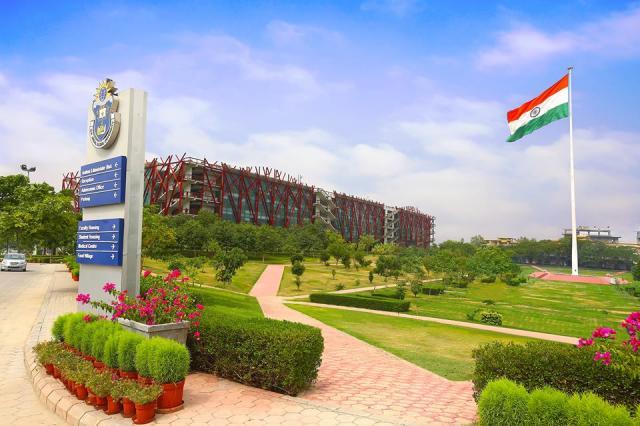
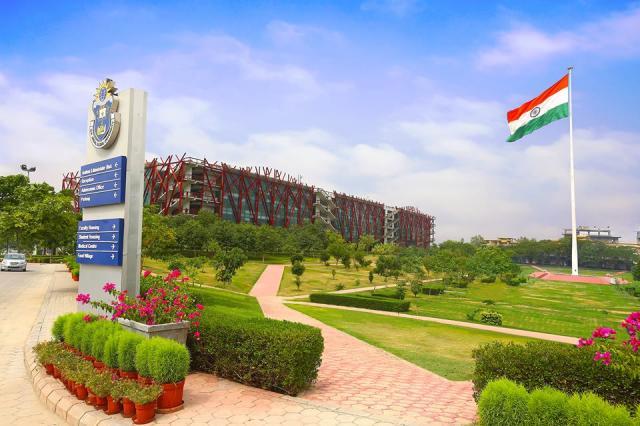
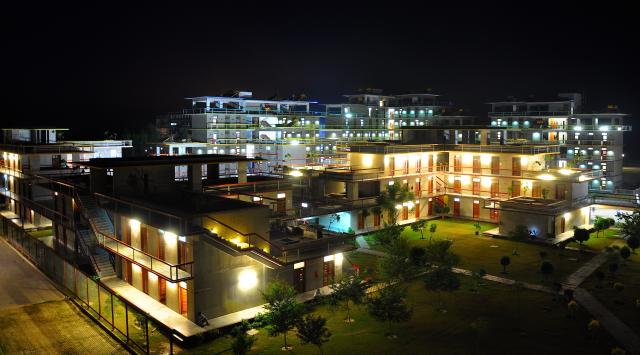
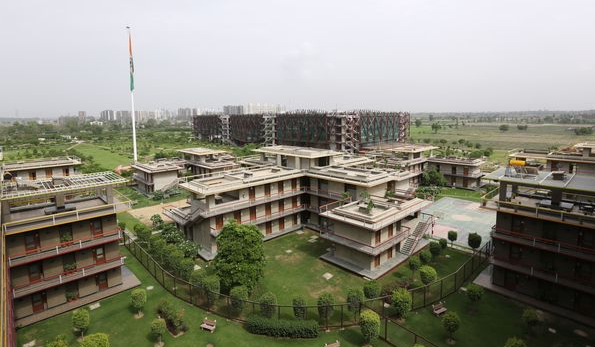
- State-of-the-art Campus: Modern academic and residential facilities at O.P. Jindal Global University.
- Diversity and Inclusion: Inclusive environment with students from diverse backgrounds.
O.P Jindal School of Liberal Arts and Humanities, Sonepat Admission
The admission process for O.P. Jindal School of Liberal Arts and Humanities (JSLH), Sonepat involves several steps to assess the suitability of applicants for its liberal arts programs. Here’s a detailed breakdown:
Eligibility Criteria:
- Academic Qualification: Applicants must have completed their 10+2 or equivalent from a recognized board.
- Minimum Marks: Typically, a minimum of 60% aggregate marks is required, but this may vary slightly each year.
Application Process:
- Online Application: Candidates must fill out the application form online on the O.P. Jindal Global University website.
- Application Fee: A non-refundable fee (usually around ₹3,000) is required during form submission.
Entrance Exam:
- JSAT (Jindal Scholastic Aptitude Test): Applicants need to take the JSAT, which tests verbal, quantitative, and logical reasoning skills.
- Alternative Exams: Scores from SAT or ACT are also accepted in place of the JSAT.
- Minimum Score: The required cut-off score may vary, but applicants are expected to meet the institution's benchmark for consideration.
Personal Statement:
- Applicants must submit a personal statement (essay) as part of the application. This essay allows students to express their motivations for pursuing liberal arts, their interests, and their aspirations.
Interview:
- Personal Interview: Shortlisted candidates are invited for an interview to assess their suitability for the liberal arts program.
Offer of Admission:
- Based on the applicant's academic qualifications, entrance test scores, personal statement, and interview performance, the admission offer is made.
Final Admission:
- Once selected, candidates must confirm their admission by paying the admission fee and completing other formalities as outlined by the university.
O.P Jindal School of Liberal Arts and Humanities, Sonepat Course
The O.P. Jindal School of Liberal Arts and Humanities (JSLH), Sonepat, offers a flexible and interdisciplinary approach to education, providing students the freedom to explore a variety of subjects.
Undergraduate Programmes
- B.A. (Hons.) Liberal Arts & Humanities
- B.A. (Hons.) Sociology
- Bachelor of Fine Arts
Postgraduate Programmes
- Post Graduate Diploma in Research & Innovation
O.P Jindal School of Liberal Arts and Humanities, Sonepat Eligibility
The eligibility criteria for admission to the O.P. Jindal School of Liberal Arts and Humanities (JSLH), Sonepat are straightforward and designed to assess a student’s academic potential and readiness for the program.
|
Course |
Duration |
Eligibility |
|
B.A. (Hons.) Liberal Arts & Humanities |
4 Years |
10+2 : 60 % |
|
B.A. (Hons.) Sociology |
4 Years |
10+2 : 60 % |
|
Bachelor of Fine Arts |
4 Years |
10+2 : 60 % |
|
Post Graduate Diploma in Research & Innovation |
1 Years |
Graduation : 50 % |
O.P Jindal School of Liberal Arts and Humanities, Sonepat Fees
The fee structure for the O.P. Jindal School of Liberal Arts and Humanities (JSLH), Sonepat is designed to cover academic tuition, campus facilities, and other essential services.
|
Course |
Duration |
Fees |
|
B.A. (Hons.) Liberal Arts & Humanities |
4 Years |
INR 6 L |
|
B.A. (Hons.) Sociology |
4 Years |
INR 3.5 L |
|
Bachelor of Fine Arts |
4 Years |
INR 3 L |
|
Post Graduate Diploma in Research & Innovation |
1 Years |
INR 5 L |
O.P Jindal School of Liberal Arts and Humanities, Sonepat Placement
The O.P. Jindal School of Liberal Arts and Humanities (JSLH), Sonepat offers robust support for students seeking placements, internships, and career opportunities. Although liberal arts programs focus on holistic education and personal growth, the school provides a range of career services to help students transition smoothly into professional fields.
O.P Jindal School of Liberal Arts and Humanities, Sonepatn Review
The O.P. Jindal School of Liberal Arts and Humanities (JSLH), Sonepat, has garnered positive reviews for its academic approach, global exposure, and campus life.
|
Component Ratings (Out of 5) |
|
|
Placements |
4.0 |
|
Infrastructure |
5.0 |
|
Faculty & Course Curriculum |
5.0 |
|
Crowd & Campus Life |
5.0 |
|
Value for Money |
4.5 |
O.P Jindal School of Liberal Arts and Humanities, Sonepat Ranking
The O.P. Jindal School of Liberal Arts and Humanities (JSLH), Sonepat, is part of the O.P. Jindal Global University (JGU), which has received significant recognition in both national and international rankings. While there are no specific standalone rankings for JSLH, its parent institution, JGU, consistently ranks among the top universities in India and globally for its interdisciplinary programs, including liberal arts.
Times Higher Education Asia Awards 2021:
- Won the “Digital Innovation of the Year” award.
Times Higher Education Asia Awards 2020, 2021, and 2022:
- Nominated for the “Workplace of the Year” award.
Times Higher Education Asia Awards 2024:
- Nominated for the “Student Recruitment Campaign of the Year” award.
O.P Jindal School of Liberal Arts and Humanities, Sonepat Cut-off
The cut-off for the O.P. Jindal School of Liberal Arts and Humanities (JSLH), Sonepat, is a crucial aspect of the admission process, indicating the minimum scores or criteria that applicants must meet to be considered for admission into the B.A. (Hons) in Liberal Arts and Humanities program.
O.P Jindal School of Liberal Arts and Humanities, Sonepat Recruiter
The O.P. Jindal School of Liberal Arts and Humanities (JSLH), Sonepat, benefits from the extensive network of its parent institution, O.P. Jindal Global University (JGU), which has established strong connections with various industries and sectors. As a result, students from JSLH have access to a diverse range of recruiters during the placement process.

Faculty (10)
';|
S.no |
Faculty |
|
1. |
Prof. Kathleen A. Modrowski Dean and Professor |
|
2. |
Prof. (Dr.) Jayani Jeanne Bonnerjee Professor and Associate Dean |
|
3. |
Prof. (Dr.) John Robert Clammer Professor |
|
4. |
Prof. Achia Anzi Associate Professor |
|
5. |
Prof. (Dr.) Abhijit Banerjee Professor |
|
6. |
Prof. (Dr.) Galina Yovtcheva Rousseva-Sokolova Professor |
|
7. |
Prof. (Dr.) Mimi Roy Professor and Associate Dean |
|
8. |
Prof. (Dr.) Sriroop Chaudhuri Professor and Associate Dean |
|
9. |
Dr. Subhra K. Bhattacharya Professor |
|
10. |
Prof. Sunil Sangra Professor of Practice |
Gallery
Contact
O.P. Jindal Global University Sonipat, Narela Road Near Jagdishpur village Sonipat, Haryana-131001, NCR of Delhi, India.
nmishra@jgu.edu.in
-
PGDM-Post Graduate Diploma in Management
Total Fee: INR 745000
-
B.Com Bachelor of Commerce
Total Fee: INR 240000
-
PGDM-Post Graduate Diploma in Management
Total Fee: INR 745000
-
B.Com Bachelor of Commerce
Total Fee: INR 240000
-
PGDM-Post Graduate Diploma in Management
Total Fee: INR 745000
-
B.Com Bachelor of Commerce
Total Fee: INR 240000
-
PGDM-Post Graduate Diploma in Management
Total Fee: INR 745000
-
B.Com Bachelor of Commerce
Total Fee: INR 240000
Highlights
- International Institute of Business Studies (IIBS) is an AICTE Approved college which is recognized by Ministry of HRD, Government of Indias
- IIBS rated India’s No.1 emerging B-School in placement by Samaja Parivarthana
- Faculty of IIBS consists of experienced corporate faculty with 65% Ph.D. holders
- Ranked 2nd among 'Top 10 Southern B Schools' by Silicon India, 2017
- Ranked 3rd in Placement among the Best B-School in India 2017 by Silicon India
Modern Facilities
- Smart Classroom: IIBS provides fully equipped classroom with air-conditioned, projectors, remote controlled LCD and high speed connected computers and cordless microphones
- Library: It is fully equipped by highly information recourses like latest periodicals, reference texts, management text books, national and international journals and DVDs and well organized
- Digital Library: Students of IIBS can be access the digital library through any computers by using their ID and password
- Auditorium: IIBS auditorium is fully furnished and laced with all modern devices to more impactful view
- Hostel: IIBS provides hostel accommodation for boys and girls with mesh facility
Conducting IIMs have been changed the pattern of the CAT exams several times over the years. It is extremely beneficial for the aspirants to know the CAT paper pattern as it helps in preparation and the aspirants can prepare according to the pattern and weightage of the topics.
Overview of the Exam Pattern of CAT 2020
| Mode of the Exam | Online Only |
|---|---|
| Total number of Questions | 100 |
| Total Marks | 300 |
| Duration of the Examination | 3 hours (180 minutes) |
| Sectional Division of the Paper | 3 sections |
| Types of the Questions | Both MCQs and Non MCQs |
| Marking Scheme |
For Correct Answers → +3 marks For Incorrect Answers → -1 mark For Unattempted Questions → No marks |
| Name of the Sections |
1. Verbal Ability & Reading Comprehension 2. Logical Reasoning & Data Interpretation 3. Quantitative Aptitude |
This Exam is conducted once in a year usually in the month of November on online mode and it is expected that this year this exam will held in the last week of November. The question paper contains 100 questions to be solved in 3 hours. 3 marks are assigned for correct answer and 1 mark is deducted for wrong answer in CAT Exam. English is the only medium of answering the questions. Each question consists of four choices from which only one is correct, candidates have to select the right answer from the given options.
CAT question paper consists of three sections divided as
- 1. Verbal and Reading Comprehension (VARC)
- 2. Data Interpretation & Logical Reasoning (DI & LR)
- 3. Quantitative Ability (QA)
Overview of the Exam Pattern of CAT 2020
| Section’s Name | Number of Questions | Duration (in mins) |
|---|---|---|
| Verbal and Reading Comprehension (VARC) | 34 | 60 |
| Data Interpretation & Logical Reasoning (DI & LR) |
VA → 10 Questions RC → 24 Questions |
60 |
| Quantitative Ability (QA) |
DI → 16 Questions LR → 16 Questions |
60 |
| Total | 100 | 180 minutes (3hours) |
Verbal Ability and Reading Comprehension Section
This section is a combination of two sub-sections namely Verbal Ability (VA) and Reading Comprehension (RC). The main focus of this section is on the English language skills of the candidates and how they understand and elucidate the paragraphs and Passages. This section consists of 34 questions, 10 questions of Verbal Ability and 24 questions of Reading Comprehension. Verbal ability sub-section consists of questions related to Para-jumbles, Summary based questions, Sentence Correction and Completion. The other sub-section, Reading Comprehension is based on the questions related to Vocabulary, title etc.
Logical Reasoning & Data Interpretation Section
This section is also divided into two sub-sections, one is Logical Reasoning (LR) and other is Data Interpretation (DI). A total of 32 questions are asked in this section, 16 questions from both the sub-section. LR section contains solvable questions generally from the topics like inequalities, symbol operations, direction sense test etc. On the other hand DI section is a little difficult and time-consuming section as it consists of several confusing data case lets questions. This section contains tricky question and a little mistake in understanding the case lets can lead the candidates to attempt all the questions from a particular set incorrectly.
Quantitative Aptitude Section
This section is a standalone section which comprises only numerical questions from different topics of Math. A total of 34 questions are asked in this section. This section contains questions based on Basic Arithmetic, Number System, Geometry, Algebra, Modern Math etc. The questions in this section ranges from easy to moderately high and can be answered easily with proper practice of the syllabus of Quantitative Aptitude.
|
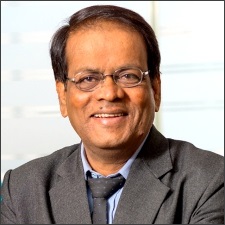
Prof. Prabhakar H
B.Sc., PG in HRD, PG in Training & Development |
|
|
Prof. Prabhakar H
B.Sc., PG in HRD, PG in Training & Development |
|
|
Prof. Prabhakar H
B.Sc., PG in HRD, PG in Training & Development |
|
|
Prof. Prabhakar H
B.Sc., PG in HRD, PG in Training & Development |
|
|
Prof. Prabhakar H
B.Sc., PG in HRD, PG in Training & Development |
|
|
Prof. Prabhakar H
B.Sc., PG in HRD, PG in Training & Development |
Facilities


CAT 2020 will be conducted in the following cities:
| Port Blair | Kurnool | Nellore | Tirupati |
| Vijaywada | Visakhapatnam | Chittoor | Itanagar |
| Dibrugarh | Guwahati | Silchara | Aurangabad |
| Gaya | Muzaffarpur | Patna | Chandigarh |
| lorem | lorem | lorem | lorem |
Contact Us
#75, Muthugadahalli, Bangalore North Jala Hobli, near International Airport airport(New Airport), Bangalore ( Karnataka)
admission@iibsonline.com


