
NIU - Noida International University - School of Journalism & Mass Communication
Journalism and Mass Communication are vital channels for delivering information and messages to the public through various mediums such as newspapers, radio, television, and the internet. While journalism focuses on the process of producing news-related content, mass communication is concerned with the broader system of distributing messages to large audiences. As the industry evolves, the demand for young, dynamic communicators and journalists continues to grow.
The Noida International University Journalism and Mass Communication offers students the opportunity to immerse themselves in this ever-changing field. With thoughtfully designed courses and a specialized teaching approach, the school integrates diverse areas of study aligned with industry demands. The program is committed to helping students identify and develop their core strengths, guiding them to make informed decisions about their future careers. Our goal is to consistently expose students to the global media landscape, preparing them to navigate and thrive in a competitive, international environment.
Highlights
|
Name of the University |
Noida International University (NIU) |
|
Name of School |
School of Journalism and Mass Communication |
|
Location |
Greater Noida |
|
Establishment Year |
2010 |
|
Ownership |
Private |
|
Campus Size |
75 acres |
|
Recognised By
|
UGC, the Council of Architecture, the Indian Association of Physiotherapists, the Indian Nursing Council, the National Medical Commission, BCI, NCTE, IIC, AIU |
|
Mode of Education |
Full-time |
Noida International University - School of Journalism & Mass Communication Courses
Noida International University courses provides a comprehensive array of academic programs spanning undergraduate, postgraduate, and doctoral levels, designed to cater to a wide range of interests and career goals. The university's diverse offerings encompass numerous disciplines, ensuring that students have access to high-quality education across various fields. Below is a detailed overview of the courses available at NIU:
- BA-JMC Bachelor in Arts - Journalism & Mass Communication
- MA-JMC Masters in Arts- Journalism & Mass Communication
- Ph.d in Mass Communication
Noida International University - School of Journalism & Mass Communication Admission
Noida International University admissions are now open, offering a broad selection of undergraduate, postgraduate, and doctoral programs. These include sought-after courses such as B.Tech, MBBS, MBA, and PhD programs across various disciplines. The admission process is merit-based, involving entrance exams and interviews conducted by the university. For technical programs, applicants are required to take the NIU Scholarship cum Admission Test (NSAT), while non-technical programs involve Group Discussions and Personal Interviews (GD/PI). Additionally, NIU greater noida accepts scores from national and state-level entrance exams such as JEE and CUET. The university provides over 25 full-time programs in fields including Law, Design, and Engineering.
Admission Process:
1. Eligibility Criteria:
- Undergraduate Programs: Applicants must have completed 10+2 or an equivalent examination from a recognized board, typically with a background in Science (Physics, Chemistry, Biology/Mathematics) and a minimum aggregate score of 50%.
- Postgraduate Programs: Candidates must hold a bachelor’s degree in a relevant discipline with a minimum aggregate score of 50%, subject to specific program requirements.
2. Entrance Examinations:
- For technical programs, candidates must take the NIU Scholarship cum Admission Test (NSAT), which evaluates aptitude and subject knowledge.
- Non-technical program applicants will participate in Group Discussions and Personal Interviews (GD/PI).
- National-level entrance exam scores, such as CUET, are accepted for relevant courses.
3. Application Process:
- Candidates are required to complete the online application form available on the NIU website and submit all necessary documents along with a non-refundable application fee.
- After document verification, eligible candidates will be notified of the schedule for entrance exams or GD/PI, as applicable.
4. Selection Criteria:
- Selection is based on program-specific criteria, which may include performance in entrance exams, GD/PI, or merit based on qualifying examinations.
5. PhD Programs:
- For PhD programs, particularly in scientific disciplines, candidates must possess a master’s degree in the relevant field. Selection typically involves an entrance exam followed by a personal interview.
Noida International University - School of Journalism & Mass Communication Eligibility
|
Courses |
Duration |
Eligibility |
|
BA-JMC |
4 years |
Minimum 50% marks in 10+2 |
|
MA-JMC |
2 years |
Minimum 50% marks in Graduation in any discipline |
|
Ph.d |
3 years |
Minimum 55% marks in Masters in Mass Communication |
Noida International University - School of Journalism & Mass Communication Fees
Kindly check the details of about NIU school of journalism and mass communication fees structure:
|
Courses |
Duration |
Total Fees |
|
BA-JMC |
4 years |
342600 |
|
MA-JMC |
2 years |
154400 |
Noida International University - School of Journalism & Mass Communication Review
|
Placements |
3.4 |
|
Infrastructure |
4.2 |
|
Faculty & Course Curriculum |
4.0 |
|
Crowd & Campus Life |
3.7 |
|
Value for Money |
3.7 |
Noida International University - School of Journalism & Mass Communication Placement
The Noida International University placement process is thorough and multifaceted, incorporating essential components aimed at boosting students' employability. It focuses on personality development, identifying skill gaps, conducting mock interviews, offering pre-placement counseling, assisting with CV creation, and providing opportunities for live projects and internships. Throughout their academic journey, students follow a carefully designed curriculum that integrates theoretical learning with practical, real-world experience, including internships at prestigious research institutions and leading corporate organizations.
|
School |
Placement Percentage (2023) |
Placement Percentage (2024) |
|
School of Business Management |
94% |
81% |
|
School of Engineering and Technology |
83% |
83% |
|
School of Fine Arts & Design |
86% |
63% |
|
School of Journalism and Mass Communication |
83%
|
100%
|
|
School of Sciences |
86% |
80% |
|
School of Nursing |
NA |
83% |
|
Overall |
86% |
81% |
Noida International University - School of Journalism & Mass Communication Ranking
See the glimpse of Noida International University Mass Communication top ranking:

Noida International University - School of Journalism & Mass Communication Recruiters


Facilities

AC Classrooms

Auditorium

Banks Facilities

Cafeteria

Hostel

Labs

Medical Facilities

Wi-Fi Campus
-
PGDM-Post Graduate Diploma in Management
Total Fee: INR 745000
-
B.Com Bachelor of Commerce
Total Fee: INR 240000
-
PGDM-Post Graduate Diploma in Management
Total Fee: INR 745000
-
B.Com Bachelor of Commerce
Total Fee: INR 240000
-
PGDM-Post Graduate Diploma in Management
Total Fee: INR 745000
-
B.Com Bachelor of Commerce
Total Fee: INR 240000
-
PGDM-Post Graduate Diploma in Management
Total Fee: INR 745000
-
B.Com Bachelor of Commerce
Total Fee: INR 240000
Highlights
- International Institute of Business Studies (IIBS) is an AICTE Approved college which is recognized by Ministry of HRD, Government of Indias
- IIBS rated India’s No.1 emerging B-School in placement by Samaja Parivarthana
- Faculty of IIBS consists of experienced corporate faculty with 65% Ph.D. holders
- Ranked 2nd among 'Top 10 Southern B Schools' by Silicon India, 2017
- Ranked 3rd in Placement among the Best B-School in India 2017 by Silicon India
Modern Facilities
- Smart Classroom: IIBS provides fully equipped classroom with air-conditioned, projectors, remote controlled LCD and high speed connected computers and cordless microphones
- Library: It is fully equipped by highly information recourses like latest periodicals, reference texts, management text books, national and international journals and DVDs and well organized
- Digital Library: Students of IIBS can be access the digital library through any computers by using their ID and password
- Auditorium: IIBS auditorium is fully furnished and laced with all modern devices to more impactful view
- Hostel: IIBS provides hostel accommodation for boys and girls with mesh facility
Conducting IIMs have been changed the pattern of the CAT exams several times over the years. It is extremely beneficial for the aspirants to know the CAT paper pattern as it helps in preparation and the aspirants can prepare according to the pattern and weightage of the topics.
Overview of the Exam Pattern of CAT 2020
| Mode of the Exam | Online Only |
|---|---|
| Total number of Questions | 100 |
| Total Marks | 300 |
| Duration of the Examination | 3 hours (180 minutes) |
| Sectional Division of the Paper | 3 sections |
| Types of the Questions | Both MCQs and Non MCQs |
| Marking Scheme |
For Correct Answers → +3 marks For Incorrect Answers → -1 mark For Unattempted Questions → No marks |
| Name of the Sections |
1. Verbal Ability & Reading Comprehension 2. Logical Reasoning & Data Interpretation 3. Quantitative Aptitude |
This Exam is conducted once in a year usually in the month of November on online mode and it is expected that this year this exam will held in the last week of November. The question paper contains 100 questions to be solved in 3 hours. 3 marks are assigned for correct answer and 1 mark is deducted for wrong answer in CAT Exam. English is the only medium of answering the questions. Each question consists of four choices from which only one is correct, candidates have to select the right answer from the given options.
CAT question paper consists of three sections divided as
- 1. Verbal and Reading Comprehension (VARC)
- 2. Data Interpretation & Logical Reasoning (DI & LR)
- 3. Quantitative Ability (QA)
Overview of the Exam Pattern of CAT 2020
| Section’s Name | Number of Questions | Duration (in mins) |
|---|---|---|
| Verbal and Reading Comprehension (VARC) | 34 | 60 |
| Data Interpretation & Logical Reasoning (DI & LR) |
VA → 10 Questions RC → 24 Questions |
60 |
| Quantitative Ability (QA) |
DI → 16 Questions LR → 16 Questions |
60 |
| Total | 100 | 180 minutes (3hours) |
Verbal Ability and Reading Comprehension Section
This section is a combination of two sub-sections namely Verbal Ability (VA) and Reading Comprehension (RC). The main focus of this section is on the English language skills of the candidates and how they understand and elucidate the paragraphs and Passages. This section consists of 34 questions, 10 questions of Verbal Ability and 24 questions of Reading Comprehension. Verbal ability sub-section consists of questions related to Para-jumbles, Summary based questions, Sentence Correction and Completion. The other sub-section, Reading Comprehension is based on the questions related to Vocabulary, title etc.
Logical Reasoning & Data Interpretation Section
This section is also divided into two sub-sections, one is Logical Reasoning (LR) and other is Data Interpretation (DI). A total of 32 questions are asked in this section, 16 questions from both the sub-section. LR section contains solvable questions generally from the topics like inequalities, symbol operations, direction sense test etc. On the other hand DI section is a little difficult and time-consuming section as it consists of several confusing data case lets questions. This section contains tricky question and a little mistake in understanding the case lets can lead the candidates to attempt all the questions from a particular set incorrectly.
Quantitative Aptitude Section
This section is a standalone section which comprises only numerical questions from different topics of Math. A total of 34 questions are asked in this section. This section contains questions based on Basic Arithmetic, Number System, Geometry, Algebra, Modern Math etc. The questions in this section ranges from easy to moderately high and can be answered easily with proper practice of the syllabus of Quantitative Aptitude.
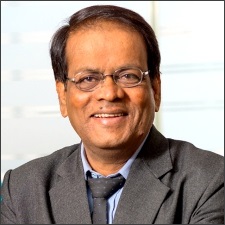
|
Prof. Prabhakar H
B.Sc., PG in HRD, PG in Training & Development |
|
|
Prof. Prabhakar H
B.Sc., PG in HRD, PG in Training & Development |
|
|
Prof. Prabhakar H
B.Sc., PG in HRD, PG in Training & Development |
|
|
Prof. Prabhakar H
B.Sc., PG in HRD, PG in Training & Development |
|
|
Prof. Prabhakar H
B.Sc., PG in HRD, PG in Training & Development |
|
|
Prof. Prabhakar H
B.Sc., PG in HRD, PG in Training & Development |
Facilities


CAT 2020 will be conducted in the following cities:
| Port Blair | Kurnool | Nellore | Tirupati |
| Vijaywada | Visakhapatnam | Chittoor | Itanagar |
| Dibrugarh | Guwahati | Silchara | Aurangabad |
| Gaya | Muzaffarpur | Patna | Chandigarh |
| lorem | lorem | lorem | lorem |
Contact Us
#75, Muthugadahalli, Bangalore North Jala Hobli, near International Airport airport(New Airport), Bangalore ( Karnataka)
admission@iibsonline.com


