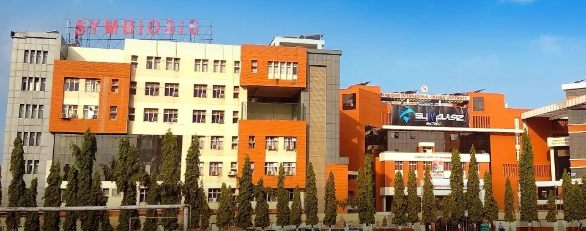
SIU Symbiosis International University-Viman Nagar, Pune
Symbiosis International (Deemed University) is situated at Viman Nagar, Pune and provides excellent education across diverse areas. It is an industry recognized, quality private education provider and offers a variety of courses. The university started in 1971. Management, Law, Engineering, Health Sciences, Humanities and Media and Communication are areas of Ph.D. study.
Symbiosis colleges in pune seeks to develop strong foundations for students in the areas of study through its strong links with industry and diverse research and internship opportunities for students. It also offers campus based job opportunities. Symbiosis International University is the preferred destination of Indian students for quality higher education because of its overall student development approach.
Courses
Highlights
SIU Symbiosis International University-Viman Nagar, Pune Courses
SIU Pune (Deemed University) provides multiple programs of UG and PG as well diploma, doctoral certificate. The University provides several field programs such as Management, Engineering, Law, Computer Studies, Health Sciences, Media and Communication, Design and Humanities. The main motive of symbiosis pune courses is more focus on quality education, industry-oriented curriculum, hands-on learning, research and industry experience so that students get more opportunity in their career.
Undergraduate
- B.B.A. LL.B. (Honours)
- LL.B.
- B.A. LL.B. (Honours)
- B.Com. LL.B. (Honours)
- B.A. (Liberal Arts) Honours with Research
- B.Sc. (Liberal Arts) Honours / Honours with Research
- B.Sc. (Liberal Arts) Honours
- B.A. (Liberal Arts) Honours
- B.B.A. - Honours/ Honours with Research
- B. Des.
- B.A. (Mass Communication) - Honours / Honours with Research
- B.B.A. (Media Management) - Honours / Honours with Research
- Global B.B.A./B.B.A. Honours with Research (Dual Degree)
Post Graduate
- LL.M.
- M. Des.
- M.A. (International Studies)
- M.A. (Global Affairs, Technology and Security)
SIU Symbiosis International University-Viman Nagar, Pune Admission
Students can follow the steps below to complete the Symbiosis International University Pune admission process:
1. Go to the symbiosis pune website and follow the steps to register for an account by providing all your personal and academic information.
2. Select which undergraduate or postgraduate course you wish to study and which institute you want to join.
3. Sign up and take the admission test required for the program (e.g. SET, SLAT, SITEEE, or SNAP).
4. If you get through, some courses will require an extra admission process, for example an interview.
5. Institutes publish their admission and selection criteria. Once this is published, the selection will be done based on the entrance test score.
6. Submit the academic and personal documents for verification to be selected for admission.
7. Admission fees must be paid to confirm a place in the University.
SIU Symbiosis International University-Viman Nagar, Pune Eligibility
SIU Symbiosis International University-Viman Nagar, Pune Fee
SIU Symbiosis International University-Viman Nagar, Pune Review
SIU Symbiosis International University-Viman Nagar, Pune Placement
SIU Symbiosis International University-Viman Nagar, Pune Ranking
SIU Symbiosis International University-Viman Nagar, Pune Recruiters

FAQs for SIU Symbiosis International University-Viman Nagar, Pune
Q1. Does Symbiosis International University UGC approved?
Ans: Yes, Symbiosis International University is recognized by UGC under section 3 of the UGC Act, 1956.
Q2. What are the courses offered by Symbiosis University, Pune?
Ans: SIU also provides undergraduate, postgraduate, diploma, certificate and doctoral courses in a range of subjects such as Management, Law, Engineering, Computer Studies, Health Sciences, Media, Communication, Design, and Humanities.
Q3. What is the address of Symbiosis International University?
Ans: Symbiosis International (Deemed University) is headquartered in Pune, Maharashtra. It has several center and campus locations such as Viman Nagar, Pune.
Q4. In which year was Symbiosis International University founded?
Ans: Symbiosis International University was founded in 1971 by Prof. Dr. S. B. Mujumdar. In 2002, it was given deemed-to-be university status.
Q5. Which is Symbiosis University, Private or Government?
Ans: SIU is a private deemed-to-be university, recognized by the University Grants Commission (UGC).
Q6. Are there placement opportunities available at symbiosis pune campus?
Ans: Yes, there is placement assistance provided by SIU constituent institutes. Students are provided with the chance of campus recruitment, internships, industry interface and career development activity.
Faculty (146)
';A Chandrasekhar
Highest Qualification: NET
Designation: Assistant Professor
Experience (In Months): Total: 218
Abhijit Dattatreya Vasmatkar
Highest Qualification: NET
Designation: Assistant Professor
Experience (In Months): Total: 159
Abhijit Dattatreya Vasmatkar
Highest Qualification: NET
Designation: Assistant Professor
Experience (In Months): Total: 159
Abhishek Jain
Highest Qualification: MBA
Designation: Assistant Professor
Experience (In Months): Total: 174
Abin Babu P
Highest Qualification: M.A
Designation: Assistant Professor
Experience (In Months): Total: 10
Bibhabasu Misra
Highest Qualification: Ph.D
Designation: Assistant Professor
Experience (In Months): Total: 131
Bindu Samuel Ronald
Highest Qualification: Ph.D
Designation: Professor
Experience (In Months): Total: 175
Chandrashekhar Jayvant Rawandale
Highest Qualification: Ph.D
Designation: Director
Experience (In Months): Total: 232
Charvi Jayant Kumar
Highest Qualification: LLM
Designation: Assistant Professor
Experience (In Months): Total: 22
Damodar Mayappa Hake
Highest Qualification: NET
Designation: Assistant Professor
Experience (In Months): Total: 91
Debjani Rane Ghosh
Highest Qualification: M.COM
Designation: Assistant Professor
Experience (In Months): Total: 204
Deepa Goel
Highest Qualification: Ph.D
Designation: Assistant Professor
Experience (In Months): Total: 225
Deepali Rani Sahoo
Highest Qualification: NET
Designation: Assistant Professor
Experience (In Months): Total: 123
Furqan Ahmad
Highest Qualification: Ph.D
Designation: Professor
Experience (In Months): Total: 385
Facilities

AC Classrooms

Auditorium

Cafeteria

Gym

Hostel

Labs

Ransomware by ./M789

Medical Facilities

Sports Complex

Wi-Fi Campus
Other Details
- Awards: 7 for Law by NIRF 3 for Law by India Today 14 for Fashion Design by India Today
Contact
Survey No. 231, Viman Nagar, Pune - 411 014. Maharashtra, India.
-
PGDM-Post Graduate Diploma in Management
Total Fee: INR 745000
-
B.Com Bachelor of Commerce
Total Fee: INR 240000
-
PGDM-Post Graduate Diploma in Management
Total Fee: INR 745000
-
B.Com Bachelor of Commerce
Total Fee: INR 240000
-
PGDM-Post Graduate Diploma in Management
Total Fee: INR 745000
-
B.Com Bachelor of Commerce
Total Fee: INR 240000
-
PGDM-Post Graduate Diploma in Management
Total Fee: INR 745000
-
B.Com Bachelor of Commerce
Total Fee: INR 240000
Highlights
- International Institute of Business Studies (IIBS) is an AICTE Approved college which is recognized by Ministry of HRD, Government of Indias
- IIBS rated India’s No.1 emerging B-School in placement by Samaja Parivarthana
- Faculty of IIBS consists of experienced corporate faculty with 65% Ph.D. holders
- Ranked 2nd among 'Top 10 Southern B Schools' by Silicon India, 2017
- Ranked 3rd in Placement among the Best B-School in India 2017 by Silicon India
Modern Facilities
- Smart Classroom: IIBS provides fully equipped classroom with air-conditioned, projectors, remote controlled LCD and high speed connected computers and cordless microphones
- Library: It is fully equipped by highly information recourses like latest periodicals, reference texts, management text books, national and international journals and DVDs and well organized
- Digital Library: Students of IIBS can be access the digital library through any computers by using their ID and password
- Auditorium: IIBS auditorium is fully furnished and laced with all modern devices to more impactful view
- Hostel: IIBS provides hostel accommodation for boys and girls with mesh facility
Conducting IIMs have been changed the pattern of the CAT exams several times over the years. It is extremely beneficial for the aspirants to know the CAT paper pattern as it helps in preparation and the aspirants can prepare according to the pattern and weightage of the topics.
Overview of the Exam Pattern of CAT 2020
| Mode of the Exam | Online Only |
|---|---|
| Total number of Questions | 100 |
| Total Marks | 300 |
| Duration of the Examination | 3 hours (180 minutes) |
| Sectional Division of the Paper | 3 sections |
| Types of the Questions | Both MCQs and Non MCQs |
| Marking Scheme |
For Correct Answers → +3 marks For Incorrect Answers → -1 mark For Unattempted Questions → No marks |
| Name of the Sections |
1. Verbal Ability & Reading Comprehension 2. Logical Reasoning & Data Interpretation 3. Quantitative Aptitude |
This Exam is conducted once in a year usually in the month of November on online mode and it is expected that this year this exam will held in the last week of November. The question paper contains 100 questions to be solved in 3 hours. 3 marks are assigned for correct answer and 1 mark is deducted for wrong answer in CAT Exam. English is the only medium of answering the questions. Each question consists of four choices from which only one is correct, candidates have to select the right answer from the given options.
CAT question paper consists of three sections divided as
- 1. Verbal and Reading Comprehension (VARC)
- 2. Data Interpretation & Logical Reasoning (DI & LR)
- 3. Quantitative Ability (QA)
Overview of the Exam Pattern of CAT 2020
| Section’s Name | Number of Questions | Duration (in mins) |
|---|---|---|
| Verbal and Reading Comprehension (VARC) | 34 | 60 |
| Data Interpretation & Logical Reasoning (DI & LR) |
VA → 10 Questions RC → 24 Questions |
60 |
| Quantitative Ability (QA) |
DI → 16 Questions LR → 16 Questions |
60 |
| Total | 100 | 180 minutes (3hours) |
Verbal Ability and Reading Comprehension Section
This section is a combination of two sub-sections namely Verbal Ability (VA) and Reading Comprehension (RC). The main focus of this section is on the English language skills of the candidates and how they understand and elucidate the paragraphs and Passages. This section consists of 34 questions, 10 questions of Verbal Ability and 24 questions of Reading Comprehension. Verbal ability sub-section consists of questions related to Para-jumbles, Summary based questions, Sentence Correction and Completion. The other sub-section, Reading Comprehension is based on the questions related to Vocabulary, title etc.
Logical Reasoning & Data Interpretation Section
This section is also divided into two sub-sections, one is Logical Reasoning (LR) and other is Data Interpretation (DI). A total of 32 questions are asked in this section, 16 questions from both the sub-section. LR section contains solvable questions generally from the topics like inequalities, symbol operations, direction sense test etc. On the other hand DI section is a little difficult and time-consuming section as it consists of several confusing data case lets questions. This section contains tricky question and a little mistake in understanding the case lets can lead the candidates to attempt all the questions from a particular set incorrectly.
Quantitative Aptitude Section
This section is a standalone section which comprises only numerical questions from different topics of Math. A total of 34 questions are asked in this section. This section contains questions based on Basic Arithmetic, Number System, Geometry, Algebra, Modern Math etc. The questions in this section ranges from easy to moderately high and can be answered easily with proper practice of the syllabus of Quantitative Aptitude.
|
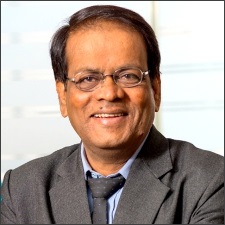
Prof. Prabhakar H
B.Sc., PG in HRD, PG in Training & Development |
|
|
Prof. Prabhakar H
B.Sc., PG in HRD, PG in Training & Development |
|
|
Prof. Prabhakar H
B.Sc., PG in HRD, PG in Training & Development |
|
|
Prof. Prabhakar H
B.Sc., PG in HRD, PG in Training & Development |
|
|
Prof. Prabhakar H
B.Sc., PG in HRD, PG in Training & Development |
|
|
Prof. Prabhakar H
B.Sc., PG in HRD, PG in Training & Development |
Facilities


CAT 2020 will be conducted in the following cities:
| Port Blair | Kurnool | Nellore | Tirupati |
| Vijaywada | Visakhapatnam | Chittoor | Itanagar |
| Dibrugarh | Guwahati | Silchara | Aurangabad |
| Gaya | Muzaffarpur | Patna | Chandigarh |
| lorem | lorem | lorem | lorem |
Contact Us
#75, Muthugadahalli, Bangalore North Jala Hobli, near International Airport airport(New Airport), Bangalore ( Karnataka)
admission@iibsonline.com


