
Victoria University Melbourne Australia
Victoria University has its independently recognized fame for providing high-level education in the world. In the times higher education world university Rankings (2018/19) VU maintains its position in the top of two percent of universities for the third continuous year. Victoria University in Australia is the only university to use blocks teaching Model, which is commonly used in Sweden and some parts of North America for more than forty years. Undergraduate student’s only one subject at one time, and in smaller classes, more than 1 subject is allowed on time with classes and great immersions in each subject. Result of year 2018 shows an increase in the percentage of pass, qualifications and high qualifications.
Victoria University is also one of top six Australian Universities to connect TAFE with higher education. Between vocational courses at Victoria University polytechnic and tertiary courses, students are allowed to easily move in one of them during their career to return to study at any point. VU paper based theory was replaced by polytechnic’s award winning combined learning model with a combination of face to face teaching and flexible E-learning.
To experience practical learning with placements in work integrated learning programs all students and courses are informed by Victoria universities strong industry and community partnerships to ensure they are ready to work as soon as they graduate. In ERA (Excellence in Research Australia) assessments 15 research disciplines was ranked above world standard. VU research offers preeminent research opportunities in the health, sports and active living and sustainable industries and livable cities.
In sports science education VU is also a global leader. Health and sports world-renowned institute fosters close relationship with over 350 sports related partner including elite sporting organizations. Many courses like business, Arts and education, health and biomedicine, engineering and science, sports and exercise science and law and Justice. Disciplines’ are based in Melbourne CBD across campuses, St Albans, Footscray, Werribe and the Sunshine Hospital Western centre for health Research and Education. You can also go for Victoria University India
Courses
Highlights
- VU's Professor Peter Sheehan and Professor Bruce Rasmussen have started research into modeling of the benefit cost ratios of investment in poorer countries. The combined completed investigation started by Karin Stenberg at the World Health Organization (WHO) with the Victoria Institute for Strategic Economic Studies (VISES) measured the social and economic returns from the investment in women and children’s health. The study shows how targeted investment in protective and newborn health, child health, immunization, family planning, HIV/AIDS and malaria in those countries could have huge impact.
- Excellence in Research for Australia (ERA) is some main research quality assessment for Australian universities. Every three years, ERA estimates the research strengths of individual universities through expert review. Over 1,000 advance researchers from Australia and outside participate in the ERA assessment process. For Australian universities ERA (Excellence in Research for Australia) is the major research quality evaluation. In every 3 years ERA evaluates the research strength of Private universities through expert review. More than 1000 managing researchers from Australia and abroad join the ERA evaluation process.
- VU gave highly in the 2015 ERA evaluation. Many of our research centre areas gained a ranking of world-standard and above.
We received the highest rating of 5 in:
- Electrical and Electronic Engineering
- Human Movement and Sports Science
- Nursing
A rating of 4 in:
- Mathematical Sciences
- Applied Mathematics
- Engineering
- Mechanical Engineering
A rating of 3 in:
- Artificial Intelligence and Image Processing
- Distributed Computing
- Information Systems
- Education
- Specialist Studies in Education
- Tourism
- Language Communication and Culture
- Cultural Studies
Contact
Postal address: PO Box 14428, Melbourne, Vic 8001, Australia Street address: Footscray Park Campus, Ballarat Road, Footscray 3011 All campus locations: For maps and addresses, see our campuses page.
-
PGDM-Post Graduate Diploma in Management
Total Fee: INR 745000
-
B.Com Bachelor of Commerce
Total Fee: INR 240000
-
PGDM-Post Graduate Diploma in Management
Total Fee: INR 745000
-
B.Com Bachelor of Commerce
Total Fee: INR 240000
-
PGDM-Post Graduate Diploma in Management
Total Fee: INR 745000
-
B.Com Bachelor of Commerce
Total Fee: INR 240000
-
PGDM-Post Graduate Diploma in Management
Total Fee: INR 745000
-
B.Com Bachelor of Commerce
Total Fee: INR 240000
Highlights
- International Institute of Business Studies (IIBS) is an AICTE Approved college which is recognized by Ministry of HRD, Government of Indias
- IIBS rated India’s No.1 emerging B-School in placement by Samaja Parivarthana
- Faculty of IIBS consists of experienced corporate faculty with 65% Ph.D. holders
- Ranked 2nd among 'Top 10 Southern B Schools' by Silicon India, 2017
- Ranked 3rd in Placement among the Best B-School in India 2017 by Silicon India
Modern Facilities
- Smart Classroom: IIBS provides fully equipped classroom with air-conditioned, projectors, remote controlled LCD and high speed connected computers and cordless microphones
- Library: It is fully equipped by highly information recourses like latest periodicals, reference texts, management text books, national and international journals and DVDs and well organized
- Digital Library: Students of IIBS can be access the digital library through any computers by using their ID and password
- Auditorium: IIBS auditorium is fully furnished and laced with all modern devices to more impactful view
- Hostel: IIBS provides hostel accommodation for boys and girls with mesh facility
Conducting IIMs have been changed the pattern of the CAT exams several times over the years. It is extremely beneficial for the aspirants to know the CAT paper pattern as it helps in preparation and the aspirants can prepare according to the pattern and weightage of the topics.
Overview of the Exam Pattern of CAT 2020
| Mode of the Exam | Online Only |
|---|---|
| Total number of Questions | 100 |
| Total Marks | 300 |
| Duration of the Examination | 3 hours (180 minutes) |
| Sectional Division of the Paper | 3 sections |
| Types of the Questions | Both MCQs and Non MCQs |
| Marking Scheme |
For Correct Answers → +3 marks For Incorrect Answers → -1 mark For Unattempted Questions → No marks |
| Name of the Sections |
1. Verbal Ability & Reading Comprehension 2. Logical Reasoning & Data Interpretation 3. Quantitative Aptitude |
This Exam is conducted once in a year usually in the month of November on online mode and it is expected that this year this exam will held in the last week of November. The question paper contains 100 questions to be solved in 3 hours. 3 marks are assigned for correct answer and 1 mark is deducted for wrong answer in CAT Exam. English is the only medium of answering the questions. Each question consists of four choices from which only one is correct, candidates have to select the right answer from the given options.
CAT question paper consists of three sections divided as
- 1. Verbal and Reading Comprehension (VARC)
- 2. Data Interpretation & Logical Reasoning (DI & LR)
- 3. Quantitative Ability (QA)
Overview of the Exam Pattern of CAT 2020
| Section’s Name | Number of Questions | Duration (in mins) |
|---|---|---|
| Verbal and Reading Comprehension (VARC) | 34 | 60 |
| Data Interpretation & Logical Reasoning (DI & LR) |
VA → 10 Questions RC → 24 Questions |
60 |
| Quantitative Ability (QA) |
DI → 16 Questions LR → 16 Questions |
60 |
| Total | 100 | 180 minutes (3hours) |
Verbal Ability and Reading Comprehension Section
This section is a combination of two sub-sections namely Verbal Ability (VA) and Reading Comprehension (RC). The main focus of this section is on the English language skills of the candidates and how they understand and elucidate the paragraphs and Passages. This section consists of 34 questions, 10 questions of Verbal Ability and 24 questions of Reading Comprehension. Verbal ability sub-section consists of questions related to Para-jumbles, Summary based questions, Sentence Correction and Completion. The other sub-section, Reading Comprehension is based on the questions related to Vocabulary, title etc.
Logical Reasoning & Data Interpretation Section
This section is also divided into two sub-sections, one is Logical Reasoning (LR) and other is Data Interpretation (DI). A total of 32 questions are asked in this section, 16 questions from both the sub-section. LR section contains solvable questions generally from the topics like inequalities, symbol operations, direction sense test etc. On the other hand DI section is a little difficult and time-consuming section as it consists of several confusing data case lets questions. This section contains tricky question and a little mistake in understanding the case lets can lead the candidates to attempt all the questions from a particular set incorrectly.
Quantitative Aptitude Section
This section is a standalone section which comprises only numerical questions from different topics of Math. A total of 34 questions are asked in this section. This section contains questions based on Basic Arithmetic, Number System, Geometry, Algebra, Modern Math etc. The questions in this section ranges from easy to moderately high and can be answered easily with proper practice of the syllabus of Quantitative Aptitude.
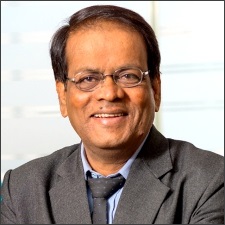
|
Prof. Prabhakar H
B.Sc., PG in HRD, PG in Training & Development |
|
|
Prof. Prabhakar H
B.Sc., PG in HRD, PG in Training & Development |
|
|
Prof. Prabhakar H
B.Sc., PG in HRD, PG in Training & Development |
|
|
Prof. Prabhakar H
B.Sc., PG in HRD, PG in Training & Development |
|
|
Prof. Prabhakar H
B.Sc., PG in HRD, PG in Training & Development |
|
|
Prof. Prabhakar H
B.Sc., PG in HRD, PG in Training & Development |
Facilities


CAT 2020 will be conducted in the following cities:
| Port Blair | Kurnool | Nellore | Tirupati |
| Vijaywada | Visakhapatnam | Chittoor | Itanagar |
| Dibrugarh | Guwahati | Silchara | Aurangabad |
| Gaya | Muzaffarpur | Patna | Chandigarh |
| lorem | lorem | lorem | lorem |
Contact Us
#75, Muthugadahalli, Bangalore North Jala Hobli, near International Airport airport(New Airport), Bangalore ( Karnataka)
admission@iibsonline.com


